
The Hidden Triggers That Keep Hyperpigmentation Active
By Leslie Nesbitt Beauty Expert
August 2 2026 | Skintipz
One of the most frustrating things about hyperpigmentation is feeling as if the dark spots keep returning no matter what you use.

But often, the problem is not that the pigmentation came back.
The problem is that the trigger never stopped.
If acne is still active, if ingrown hairs are still developing, if the skin is being picked, scratched, irritated, overheated, or over exfoliated, the skin continues receiving signals to produce more pigment.
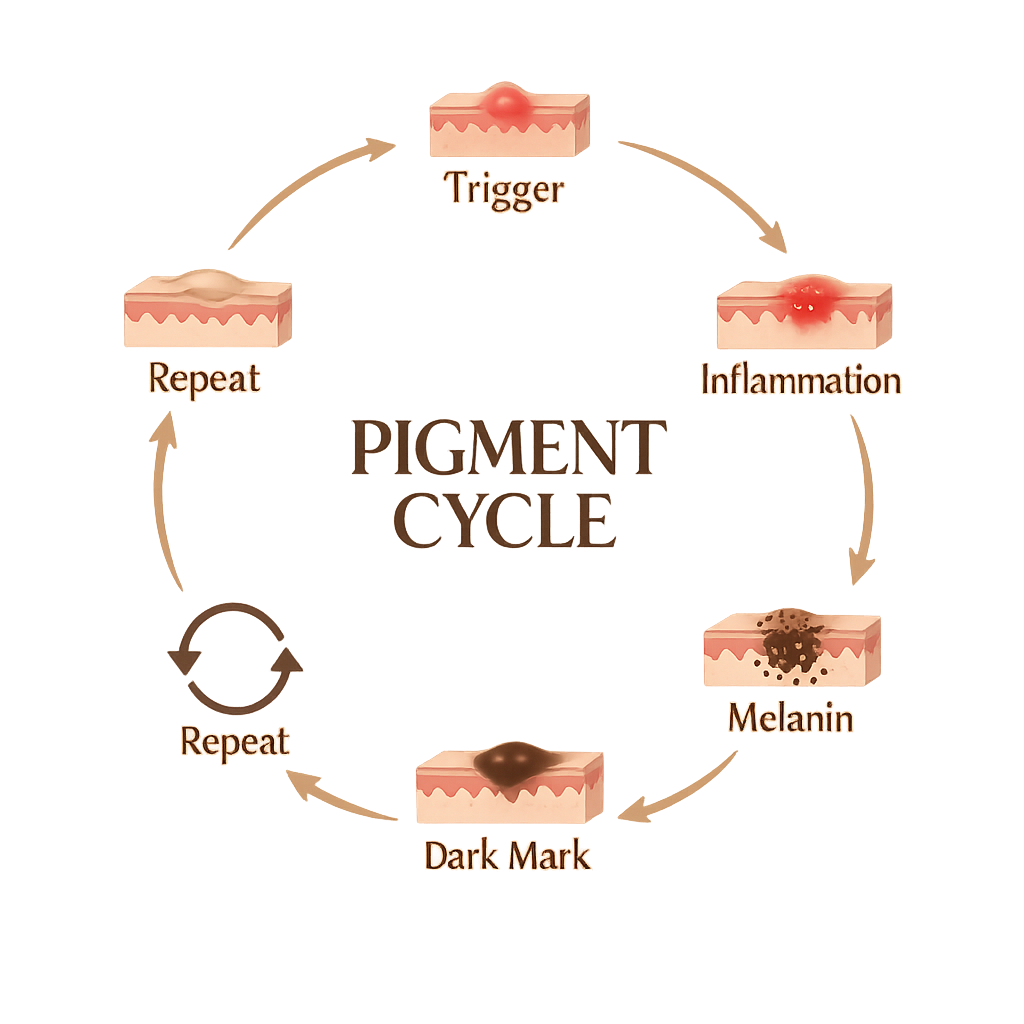
The Pigmentation Cycle
Hyperpigmentation often follows a cycle.
First there is a trigger.
That trigger creates inflammation.
Inflammation activates melanocytes, the cells responsible for producing melanin.
More melanin is then deposited into the skin, creating a visible dark mark.
If the trigger continues, the cycle starts again.
Common ongoing triggers include:
- Active acne
- Ingrown hairs
- Picking and scratching
- Insect bites
- Friction
- Shaving irritation
- Harsh exfoliation
- Hormonal changes
- Heat and inflammation
- Inconsistent sunscreen use
The key is to identify what keeps restarting the cycle.
Clinical Insight
One of the biggest mistakes I see is treating yesterday’s pigmentation while creating tomorrow’s.
The skin cannot fully recover if it is constantly being irritated.
In melanin rich skin, even low grade inflammation can result in visible discoloration.
The goal is not simply to fade pigment.
The goal is to stop the cycle.
Why Treatment Sometimes Fails?
Many people begin using brightening products while the original cause is still active.
For example, someone may be treating acne marks while still developing new acne every week.
Someone else may be trying to fade ingrown hair marks while continuing to shave in a way that creates irritation.
Another person may be using strong exfoliating acids every night because they want faster results, but the irritation from over exfoliation may actually be creating more inflammation.
Stop Chasing the Spot
If dark marks keep appearing, start looking at the skin condition underneath them.
If acne is the trigger: Control the breakouts first.
Reducing new inflammation means fewer new dark marks.
If ingrown hairs are the trigger: Improve shaving technique, reduce friction, and use gentle exfoliation instead of picking.
If irritation is the trigger: Simplify the skincare routine.
Too many acids, scrubs, peels, or active ingredients can compromise the skin barrier and prolong inflammation.
If sun exposure is worsening the marks: Use broad spectrum sunscreen consistently.
UV exposure can deepen existing pigmentation and slow down the fading process.
If picking is the trigger: Hands off.
Every time you squeeze, scratch, or dig into the skin, you extend the inflammatory response.
Beauty Tip of the Week
Stop chasing the spot and start treating the trigger.
A dark mark is often the final stage of something that happened earlier.
If you want fewer dark spots, focus on reducing the inflammation that creates them.
Ask Leslie
Why does one dark spot fade while another one appears?
Because the skin may still be experiencing new inflammation.
If acne, ingrown hairs, irritation, picking, or another trigger continues, new pigmentation can develop even while older marks are fading.
This can make it seem as though the treatment is not working when the real issue is that new pigmentation is constantly being created.
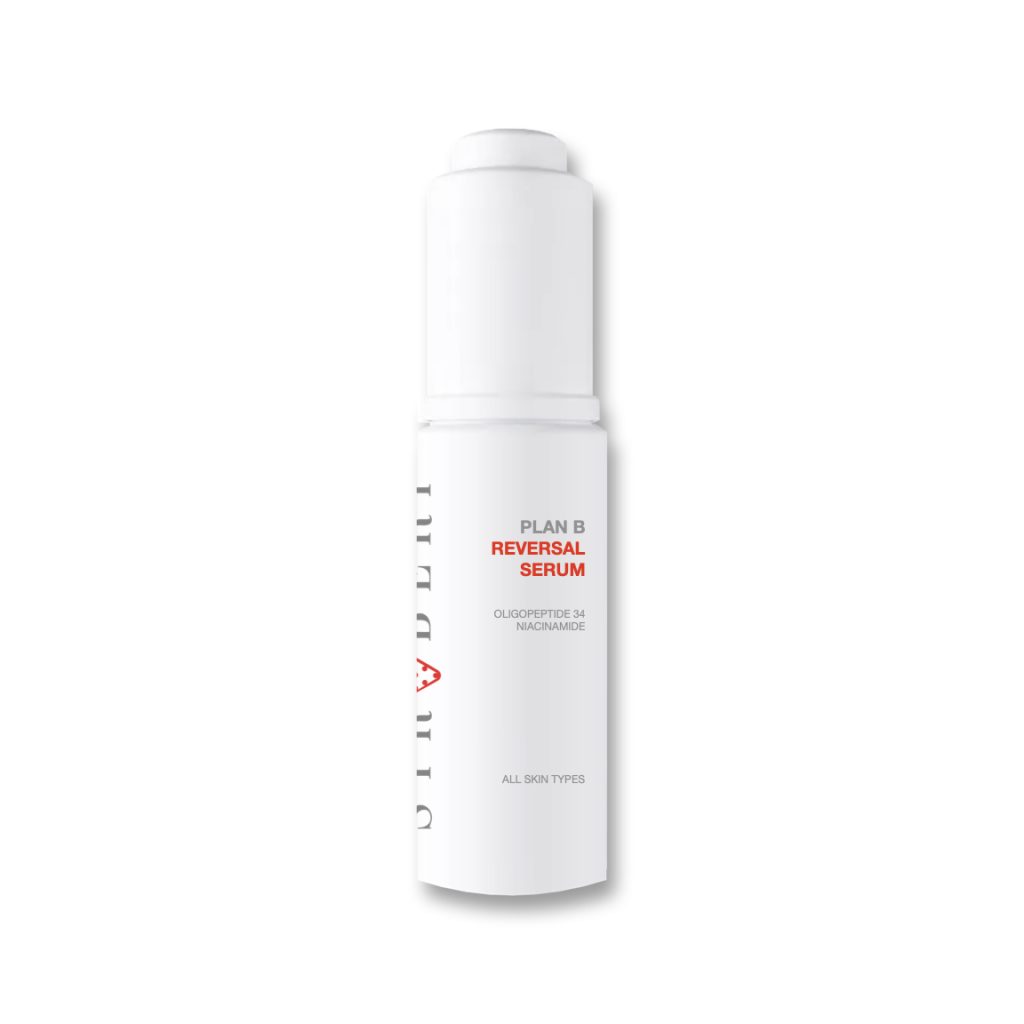
Product Spotlight
Straberi Plan B Reversal Serum
Plan B Reversal Serum is designed to help improve the appearance of uneven skin tone while supporting brighter, healthier looking skin.
For best results, brightening products should be paired with a routine that also controls the original trigger and includes daily sun protection.
Treating the pigment without addressing the cause may only produce temporary improvement.
Beauty Tip of the Week
Do not judge a pigmentation treatment only by how quickly it fades an existing spot.
A complete routine should also help prevent new marks by protecting the skin from ultraviolet exposure, controlling inflammation, and maintaining a healthy skin barrier.
Ingredient Spotlight
Azelaic Acid
Azelaic acid is a multifunctional skincare ingredient that can be especially useful for people dealing with both breakouts and uneven pigmentation.
Benefits
- Helps reduce visible inflammation
- Supports clearer looking skin
- Helps improve uneven skin tone
- Can reduce the appearance of post inflammatory pigmentation
- Supports a healthier skin environment
Why It Matters
Azelaic acid is valuable because it can address both the inflammation that contributes to pigmentation and the discoloration itself.
That makes it a useful ingredient for people who feel as though they are constantly treating new dark marks.
Bottom Line
Hyperpigmentation is often the result of a cycle.
Trigger. Inflammation. Melanin. Dark mark. Repeat.
Breaking that cycle is one of the most important steps toward clearer, more even looking skin.
Treat the cause. Calm the inflammation. Protect the skin. Then fade the mark.
