Good Humans · Community · November 15, 2026
What Does It Take to Become Disabled?
Conscious Living, Community Thriving. Cultivating a Conscious Community.
Good Humans 268 Inc.
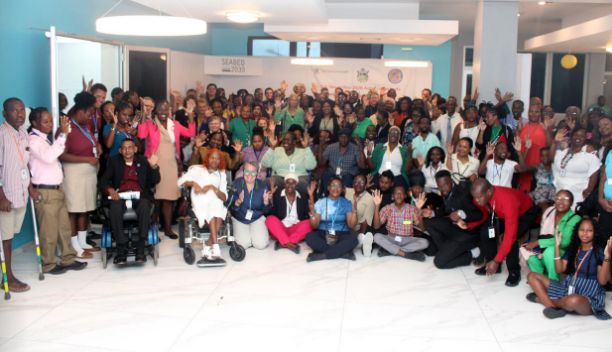
What does it take to become disabled? A car accident? A medical diagnosis? A fall down the stairs? A stroke? An illness that changes your body without warning? Or perhaps something as ordinary as waking up one morning and discovering that the body you have depended on your entire life no longer functions the way it did yesterday? Have you ever considered that the distance between being able-bodied and becoming disabled may be nothing more than a single moment?
We often speak about disability as though it belongs to a particular group of people, a community separate from ourselves. We see someone using a wheelchair, walking with a cane, wearing a hearing aid or navigating life differently, and unconsciously draw a line between their reality and ours. But who gave us the assurance that we will always remain on the other side of that line? Who promised us perfect health, uninterrupted mobility or lifelong independence?
Disability is part of being human
According to the World Health Organization, approximately 1.3 billion people, representing 16% of the world’s population, experience significant disability. That is roughly one in every six people. The WHO reminds us that ‘Disability is part of being human.’ Yet how many of us genuinely live with that understanding? How many recognize that disability is not necessarily something we are born with, but something we may acquire through illness, injury or ageing?
Consider the construction worker who leaves home one morning, kisses his children goodbye and never imagines that an accident could permanently change his mobility. Consider the teacher who spends decades standing before a classroom, only to develop a chronic condition that makes standing unbearable. Consider the young professional whose eyesight deteriorates, the athlete who experiences a spinal injury or the parent whose stroke changes their ability to communicate. Were these individuals expecting disability? Did they somehow choose it?
Sometimes disability arrives dramatically, accompanied by ambulance sirens, emergency surgery and heartbreaking conversations. Other times, it arrives quietly, through persistent pain, unexplained fatigue, deteriorating joints or symptoms that doctors struggle to diagnose. There may be no dramatic accident, no visible injury and no obvious explanation. Does the absence of visible evidence make someone's suffering less legitimate? Must disability be seen before it can be believed?
The experience of Joshuanette Francis, Founder and President of Good Humans 268 Inc., offers a powerful example of how unexpectedly disability can become part of someone's life. Diagnosed with osteoarthritis at just twenty-four years old, she found herself navigating physical limitations at an age when society expects young adults to be building careers, pursuing opportunities and enjoying their independence. Who anticipates becoming disabled in their twenties? Does receiving a medical diagnosis suddenly erase someone's ambitions, intelligence, qualifications or ability to contribute meaningfully to society? Certainly not. Yet why does society so often treat a change in physical ability as though it automatically diminishes a person's professional or personal value? And why must individuals who acquire disabilities fight so hard to prove that they remain just as capable, valuable and deserving of opportunities as they were before their diagnosis?
What happens after disability enters your life?
Perhaps the more uncomfortable question is not what it takes to become disabled, but what happens after disability enters your life. What happens when your employer no longer considers you useful? When public transportation becomes inaccessible? When buildings have stairs but no ramps? When people question your productivity, your capabilities or even your honesty? Is the greatest challenge always the medical condition, or is it the society that refuses to accommodate it?
The United Nations Convention on the Rights of Persons with Disabilities recognizes that disability arises through interactions between impairments and barriers that restrict participation. In other words, disability is not simply about what a person's body cannot do; it is also about what society refuses to make possible. If someone cannot enter a building because there is no accessible entrance, who created that exclusion? The individual or the architect?
The consequences extend beyond inconvenience. The WHO reports that some persons with disabilities die up to twenty years earlier than persons without disabilities. These disparities are connected to discrimination, poverty, inaccessible services and unequal healthcare.
How can we celebrate medical advancement while accepting systems that leave millions behind? What good is a healthcare service if those who need it cannot access it?
Building a community that includes everyone
Here in Antigua and Barbuda, these questions deserve serious consideration. Are our workplaces prepared to accommodate employees who acquire disabilities? Are our schools teaching children that disability is part of human diversity? Are our roads, sidewalks, businesses and public institutions designed with everyone in mind? Or are we creating environments that work wonderfully until the day our own bodies require something different?
We must also challenge the assumption that disability automatically means dependence, helplessness or an inability to contribute. A wheelchair does not eliminate intelligence. Chronic pain does not erase leadership. Hearing loss does not diminish creativity. Visual impairment does not destroy ambition. Why are we so quick to focus on what someone has lost rather than what they still possess? Why must persons with disabilities continuously prove their worth?
Ultimately, becoming disabled may require nothing more than being human. It can happen to a child, a parent, an athlete, a politician, an employer or a doctor. No profession, social class or bank account guarantees immunity. So perhaps the question we should ask is this: Are we building a society that welcomes people only while they are able-bodied, or one that continues to value them when their circumstances change?
Because the real test of inclusion is not how we treat disability when it belongs to somebody else. It is whether we have created a world in which we ourselves could become disabled tomorrow and still live with dignity, opportunity, independence and respect. If disability became your reality tomorrow, would the society you helped create be ready to welcome you?