
By St. Paul’s News Team
August 30 2026 | International
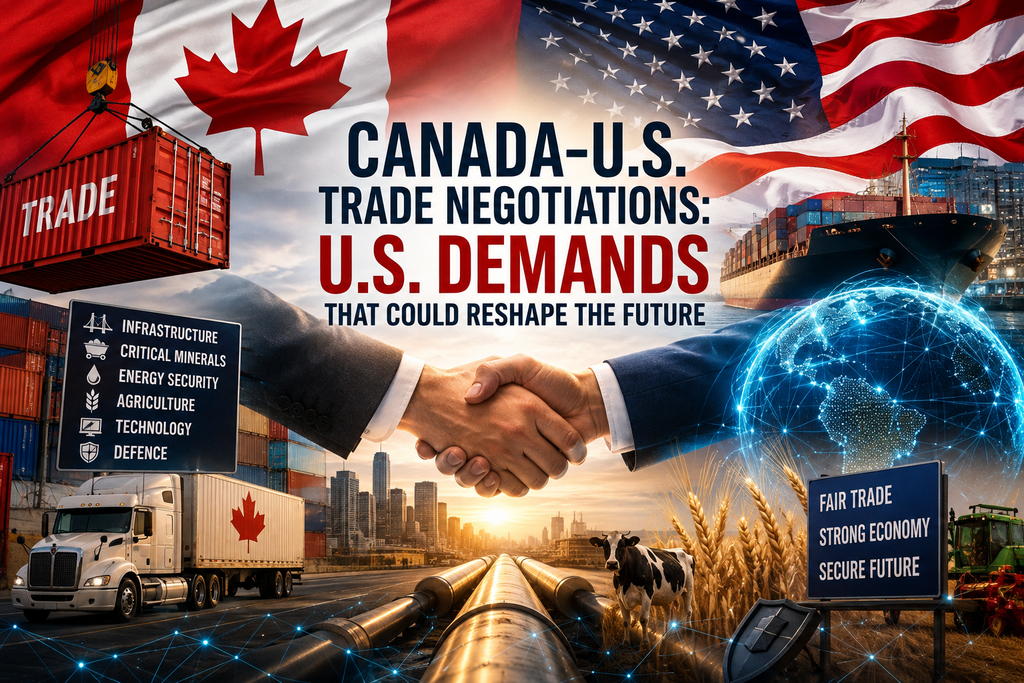
Canada and the United States are facing a potentially consequential round of trade negotiations, with a wide-ranging list of reported U.S. demands touching everything from energy and agriculture to technology, defence and critical minerals.
The proposals summarized in the accompanying graphic suggest Washington is seeking significant changes to how Canada manages key areas of its domestic economy and international trade relationships.
Among the issues highlighted are greater U.S. involvement in strategic infrastructure investments, closer Canadian alignment with American trade restrictions on third countries, and preferential access to critical minerals and Canadian energy supplies.
The list also points to proposed changes affecting Canada’s digital services tax, cultural and French-language protections, public procurement policies and agricultural supply-management system. Automobile manufacturing, pharmaceutical patents, military procurement and cross-border e-commerce are also identified.
If these demands accurately reflect positions being advanced in negotiations, their implications would extend well beyond tariffs. Several involve questions of Canadian regulatory authority, domestic economic policy and the country’s ability to independently determine its relationships with other trading partners.

For the Caribbean, the negotiations are also worth watching closely. Canada and the United States are major economic partners for the region, and significant changes in North American trade, production or supply chains can eventually influence prices, investment and the cost of imported goods throughout Caribbean economies.
As negotiations continue, the key question will be how much either government is prepared to compromise — and whether the resulting agreement strengthens North American economic cooperation or creates new tensions between two of the world’s closest trading partners.
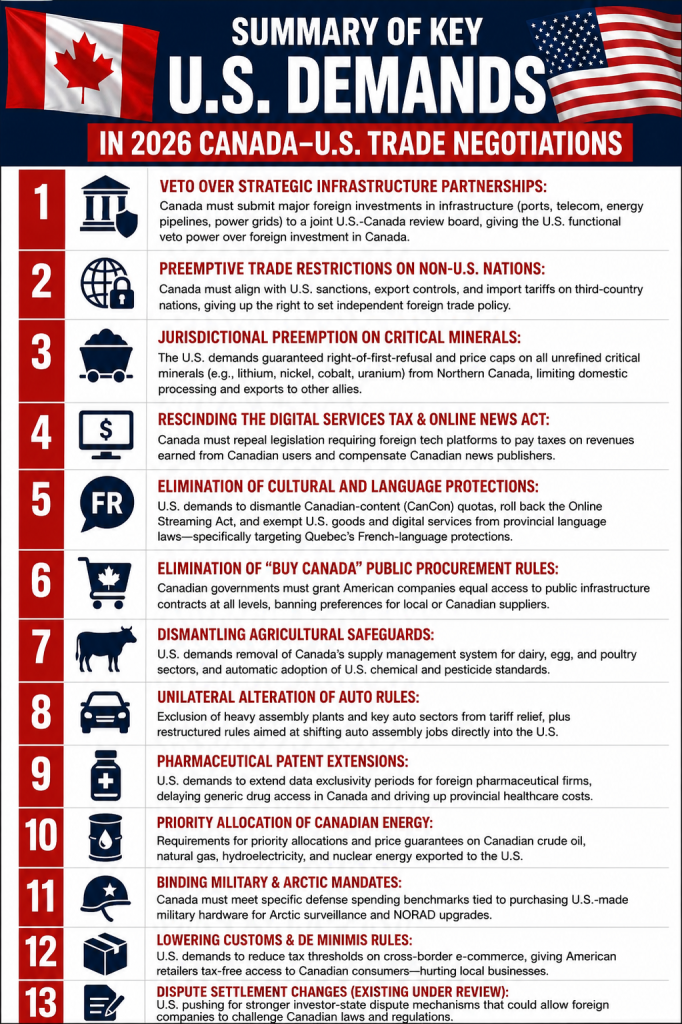
Editor’s note: The accompanying graphic presents a summary of purported U.S. negotiating demands. Individual claims should be independently verified against official negotiating documents before being reported as confirmed U.S. government positions.