
By Good Humans 268
July 19 2026 | Local
Every event tells a story. It is a story of celebration, culture, music, sport, networking or community. Thousands of people gather together to create memories that may last a lifetime. Yet when the lights go out, the music stops and the crowds disappear, another story begins. It is the story very few people see or even think about. It is the story of what is left behind. Plastic bottles, aluminum cans, glass bottles, food containers, cardboard boxes, plastic utensils, napkins, decorations, food waste, cooking oil, wastewater and sewage all become part of the hidden environmental cost of hosting an event. While we celebrate the success of an event by attendance numbers or ticket sales, we rarely measure the mountain of waste that accompanies it.

As we continue to grow our tourism industry, expand our festivals and host more conferences, sporting events and cultural celebrations, perhaps it is time to ask ourselves a simple question. Are we planning successful events, or are we simply creating larger waste management problems? Every carnival, music festival, food fair, wedding, corporate function and sporting competition creates waste from beginning to end. The hotels supplying guests generate waste. The restaurants preparing meals generate waste. Vendors create waste. Beverage suppliers create waste. Promotional materials become waste. Even the portable toilets servicing large events produce sewage that requires proper treatment. The true cost of an event extends far beyond the final invoice or entertainment budget.
For years, conversations surrounding sustainability have focused heavily on recycling bottles and cans. While recycling remains an important part of protecting our environment, experience has shown that recycling alone is not enough. Waste management is far more complex than simply placing a recycling bin in the corner of a venue. Every event produces multiple waste streams that require different solutions. Plastic, aluminium, glass, cardboard, food waste, wastewater and sewage all require different handling systems. If one part of that system fails, the entire effort begins to break down.
One of the biggest lessons learned through years of working in waste management is that recycling is not a one-size-fits-all solution. It is a complete system built upon several moving parts working together. The first requirement is education. Every stakeholder must understand their role. Businesses supplying beverages need education. Event promoters need education. Vendors need education.
Volunteers require training. Patrons need clear instructions. Even the individual purchasing a single drink needs to know what happens to that bottle after they finish using it. Without education, even the best-designed recycling programme will struggle because people simply cannot participate in a system they do not understand.
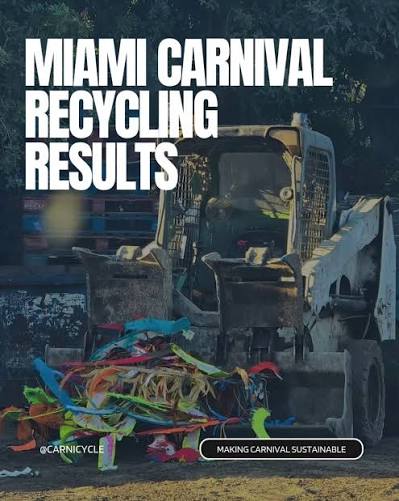
Education cannot be a one-week campaign or a few social media posts before a major festival. Changing behaviour takes time, repetition and consistency. It requires radio programmes, television campaigns, newspaper articles, school education, community outreach, social media content, workplace training and public conversations that continue year after year. Real environmental change is built over time. It requires continuous investment, patience and the willingness to keep repeating the same message until sustainable habits become second nature.
The second requirement is infrastructure. We often tell people to recycle, yet fail to provide them with the opportunity to do so. There is little value in educating thousands of people if the only option available is a single overflowing garbage bin.
Events require properly labelled collection stations, clearly separated recycling containers, food waste bins and adequate storage areas that prevent recyclable materials from becoming contaminated. There must also be transportation systems capable of moving materials efficiently to their next destination. Infrastructure transforms good intentions into meaningful action.
The third requirement is perhaps the most overlooked of all. Every recyclable item needs somewhere to go. Collecting bottles means very little if there is no recycling facility. Separating glass serves little purpose if there is nowhere to process it. Food waste should not simply be collected before ending up in the landfill. It should become compost that supports agriculture and landscaping. Wastewater requires proper treatment. Every material generated during an event must have an end destination that allows it to become part of a circular economy rather than another burden on an already overcrowded landfill.
This is why the conversation must move beyond recycling and towards better waste management. Imagine introducing a recycling programme that only accepts one particular brand of bottle. What happens when someone brings another glass bottle, a juice bottle, a plastic detergent container or another recyclable item? Do we simply throw those materials into the garbage? Doing so defeats the purpose of environmental awareness. A successful waste management system cannot focus on only one material while ignoring the rest. It must be designed holistically so that every waste stream has a practical solution.
That holistic approach also requires stronger legislation, greater collaboration and the political will to invest in long-term solutions. Deposit return systems, recycling legislation and environmental policies must continue evolving to include additional materials while encouraging businesses and consumers alike to take greater responsibility for the waste they generate. Governments cannot solve the problem alone. Neither can environmental organisations nor the private sector. Success depends on partnerships where everyone understands that protecting the environment is a shared responsibility rather than someone else’s job.
The true cost of events is not measured only by the money spent organising them. It is measured by the environmental footprint they leave behind. Every plastic bottle that enters a landfill unnecessarily represents a missed opportunity.
Every aluminium can buried instead of recycled is a valuable resource lost. Every glass bottle discarded instead of recovered increases pressure on our landfill. Every kilogram of food waste that could have become compost instead produces harmful greenhouse gases as it decomposes. Every litre of untreated wastewater presents another environmental challenge. These costs may not appear on an event budget, but they are paid by our communities, our environment and future generations.
Imagine if every event was designed with waste management in mind from the very beginning rather than treating it as an afterthought. Imagine if sustainability became just as important as entertainment, security and logistics. Imagine if organisers measured success not only by attendance figures but also by the percentage of waste diverted from the landfill. Every destination wants to be known for unforgettable experiences. Perhaps the greatest legacy any event can leave behind is not the memories it creates during a single day, but the cleaner, healthier and more sustainable future it helps build long after the final guest has gone home.