
By St. Paul’s News Team
July 19 2026 | International Sports
Spain are world champions once again after edging Argentina 1-0 in extra time to win the 2026 FIFA World Cup, securing their second global title and bringing an end to the first men’s World Cup staged in North America in more than 30 years.
The victory marks Spain’s first World Cup triumph since its historic success in South Africa in 2010 and extends the team’s remarkable unbeaten run to 38 matches, a streak that also includes its victory at the 2024 UEFA European Championship.
Spain controlled possession for much of the contest, but Argentina’s resilient defence frustrated the European champions throughout regulation time. Goalkeeper Emiliano Martínez delivered a standout performance, making 11 saves, the most ever recorded in a men’s FIFA World Cup final, to repeatedly deny Spain’s attacking threats.
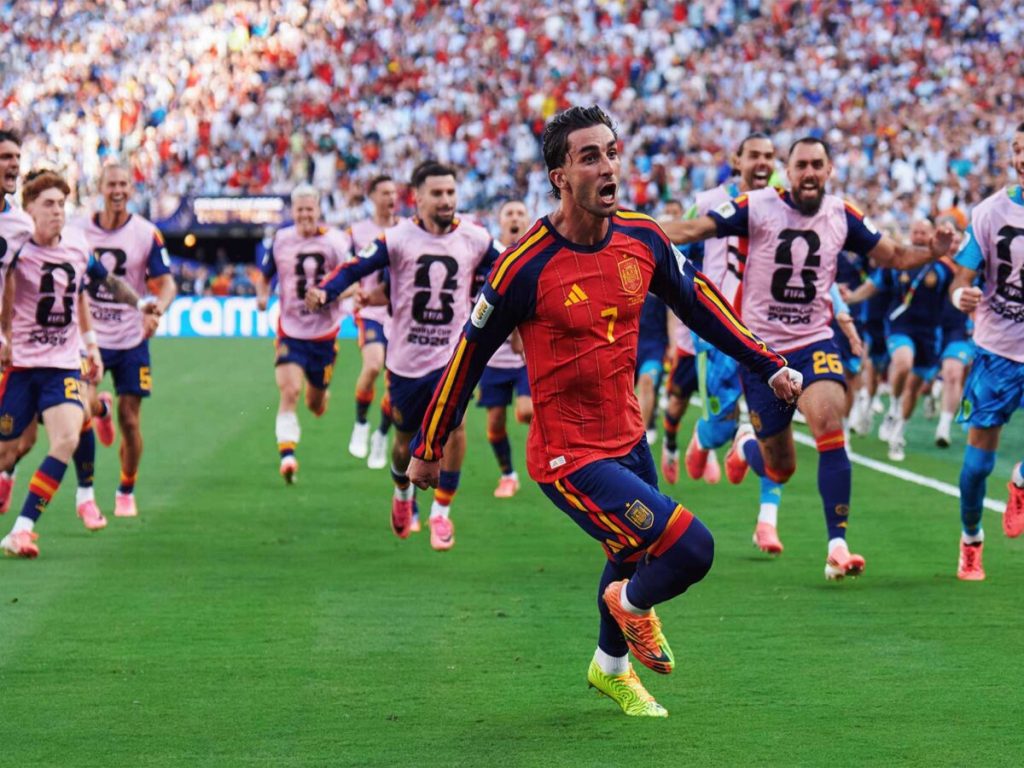
Despite Spain’s dominance, Argentina remained organised defensively, limiting clear-cut opportunities and keeping the match scoreless after 90 minutes.
The turning point came deep into stoppage time when Argentine midfielder Enzo Fernández was shown a second yellow card after bringing down Spain defender Pau Cubarsí with a heavy challenge. Fernández had earlier been cautioned for dissent, and his dismissal forced Argentina to play the entire period of extra time with 10 men.
Spain eventually capitalised on their numerical advantage.
After sustained pressure, winger Nico Williams headed a cross back into the centre of the penalty area, where Ferran Torres was perfectly positioned to calmly finish past Martínez, scoring what proved to be the decisive goal.
The strike sealed Spain’s second World Cup crown and capped another memorable tournament for a side that has established itself as one of world football’s dominant forces. For Argentina, the defeat marked a heartbreaking end to another impressive World Cup campaign led by veteran captain Lionel Messi.
At 39, Messi once again demonstrated why he is regarded among football’s greatest players, finishing the tournament with eight goals and four assists. His performances included two crucial assists in Argentina’s dramatic semifinal victory over England.
Before the final, Argentina head coach Lionel Scaloni declined to speculate on whether the match would be Messi’s final appearance for the national team.
“I wouldn’t know what to tell you,” Scaloni said. “He never stops surprising us.”
While questions remain over Messi’s international future, the night ultimately belonged to Spain, whose disciplined defending, patient attacking play and extra-time breakthrough secured the country’s second FIFA World Cup title and reaffirmed its place among football’s elite.