
Regional · November 15, 2026
Reparations Must Go Beyond Dialogue
Caribbean urged to set terms for historical justice.
St. Paul’s Weekly News · Regional report
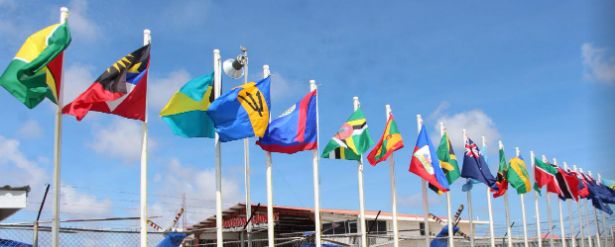
The debate over reparations for slavery and colonial exploitation has gained renewed momentum following the conclusion of the Commonwealth Heads of Government Meeting (CHOGM) in Antigua and Barbuda on November 4, with growing calls for Caribbean nations to take a more assertive position in determining the terms of reparatory justice.
The summit concluded with leaders welcoming Britain's willingness to participate in what was described in the final communiqué as a “structured, time-bound, inclusive and good-faith dialogue on reparatory justice”.
However, Britain's position has already raised questions about the scope and potential outcome of those discussions. Prime Minister Andy Burnham has indicated an openness to a formal apology and pledged £40 million over three years towards Caribbean infrastructure development, including renewable energy initiatives, while ruling out direct financial reparations.
The position has drawn criticism from Caribbean leaders, including St Lucia's Prime Minister and CARICOM Chairman, Philip J. Pierre, who argued that excluding financial reparations from the outset undermines the purpose of meaningful dialogue.
“A dialogue that begins by placing reparations outside the room cannot be a complete dialogue,” Pierre stated.
The argument being advanced is that the Caribbean must not simply accept the framework established by Britain but should take the lead in defining what reparatory justice should entail and how it should be delivered.
A historical debt that remains unresolved
The issue of reparations is rooted in Britain's historical involvement in the transatlantic slave trade and the economic benefits derived from centuries of enslaved African labour.
When Britain abolished slavery in 1833, the government allocated £20 million in compensation to slave owners for the loss of what was then legally regarded as their property. Enslaved Africans, however, received no compensation and were subjected to a further period of forced apprenticeship.
The financial arrangement was eventually settled through government borrowing, with the final portion of the debt repaid in February 2015.
This historical record remains central to the Caribbean’s reparations argument, particularly the contention that Britain acknowledged the financial implications of abolition but compensated enslavers rather than the people whose labour and freedom had been taken.
Estimates of the scale of the transatlantic slave trade further illustrate the magnitude of the injustice.
The Slave Voyages database estimates that approximately 12.5 million Africans were forced aboard ships bound for the Americas, with about 10.7 million surviving the Middle Passage. British vessels transported more than three million of those individuals.
Research presented in 2023 by the Brattle Group, involving Jamaican jurist Patrick Robinson, estimated that approximately 19 million people were enslaved across the Americas over four centuries.
The economic consequences extended beyond the plantations. Enslaved labour contributed to the development of Britain's financial institutions, shipping industries, insurance companies, ports and manufacturing sectors, while Caribbean societies were left with enduring social and economic disadvantages.
The Brattle Group study placed Britain's estimated reparations liability at approximately US$24 trillion, with Jamaica accounting for an estimated US$9.5 trillion.
While the prospect of receiving such sums in direct financial payments is considered unlikely, advocates argue that the figures demonstrate the enormous scale of the historical exploitation and provide a basis for assessing the adequacy of proposed reparatory initiatives.
Against that background, the proposed £40 million British contribution towards Caribbean infrastructure has been criticised as insufficient to address the magnitude of the historical debt.
Reparations beyond financial compensation
The argument also challenges the perception that reparations should be limited to direct payments to individuals or households.
Instead, it advocates a broader approach focused on rebuilding the institutional, technological, scientific and industrial capacity that Caribbean countries were denied through centuries of exploitation.
This approach is consistent with the CARICOM Reparations Commission’s Ten Point Plan, first presented in 2014 and subsequently renewed.
The plan addresses a range of issues, including public health, education, debt cancellation, technology transfer and economic development.
Technology transfer, in particular, is identified as an important component of the reparatory framework, with calls for greater access to scientific knowledge, research and technical expertise.
What meaningful reparations could deliver
Among the proposals being advanced are several practical initiatives designed to create lasting benefits for Caribbean societies.
These include partnerships between British universities and regional educational institutions, such as the University of the West Indies, to provide access to research facilities, scientific laboratories, teaching resources and intellectual property.
In healthcare, reparatory arrangements could support the acquisition of diagnostic equipment, specialist medical training and the transfer of technology needed to manufacture essential medicines within the Caribbean.
The establishment of manufacturing facilities across the region is another proposed priority. Such investments would ideally include local management, technical training, apprenticeships and the transfer of production knowledge, allowing Caribbean countries to develop sustainable industries and create skilled employment.
Debt relief also features prominently in the discussion. While Burnham has raised the possibility of debt restructuring, Caribbean leaders have long argued that existing international financial classifications often prevent vulnerable small island developing states from accessing affordable financing and meaningful debt relief.
Proponents of reparatory justice contend that these initiatives must be properly costed, supported by clear implementation timelines and incorporated into legally binding agreements rather than left to the discretion of successive governments.
The role of the British monarchy
The involvement of the British monarchy has also come under scrutiny.
During his visit to Antigua and Barbuda, King Charles III expressed profound personal sorrow over the suffering caused by slavery but stopped short of issuing a formal apology.
He also highlighted the Royal Navy's role in ending the transatlantic slave trade, describing its contribution as significant.
However, critics argue that a complete account of the monarchy's historical involvement must also acknowledge the participation of previous British monarchs in the development and expansion of the slave trade.
Historical records point to Queen Elizabeth I's investment in the voyages of John Hawkins during the 1560s, including the provision of a royal vessel, the Jesus of Lübeck.
Similarly, Charles II granted a royal charter to the Royal African Company, which was headed by his brother James, Duke of York, who later became King James II. The company became one of the largest and most significant British institutions involved in transporting enslaved Africans across the Atlantic.
For advocates of reparations, acknowledging the monarchy's historical involvement is an essential part of confronting the full extent of Britain's responsibility.
Addressing criticism and ensuring accountability
The reparations debate has also attracted criticism within Britain and the Caribbean.
Conservative Party leader Kemi Badenoch has reportedly urged Burnham against issuing a formal apology, arguing that doing so could expose Britain to financial claims.
Within the Caribbean, Jamaican commentator Elizabeth Morgan has questioned the practicality of the revised CARICOM Ten Point Plan, raising concerns about enforcement and the possibility that reparations discussions could distract from the responsibility of Caribbean governments to address their own development challenges.
Those concerns have prompted calls for greater accountability, transparency and clearly defined objectives.
Supporters of reparations maintain that historical injustices do not absolve Caribbean governments of responsibility for their decisions and policies since independence. Rather, they argue that reparatory justice and good governance must operate together to address the region's continuing economic and social challenges.
Caribbean must determine its own agenda
As discussions between Britain and CARICOM move towards a more structured process, the central challenge for Caribbean governments will be ensuring that the region's demands are clearly articulated and collectively agreed upon. This will require engagement beyond political leaders, bringing together national parliaments, universities, churches, trade unions, private-sector organisations and members of the Caribbean diaspora.
The questions confronting the region are practical as well as historical: What technologies should be transferred? Which industries should be developed? What investments are needed in healthcare and education? What mechanisms will ensure that commitments are honoured?
The fundamental argument is that reparations must produce meaningful and measurable improvements in the lives of Caribbean people, rather than remain confined to expressions of regret, symbolic gestures and development assistance.
While Britain's willingness to enter discussions represents an important development, Caribbean leaders are being urged not to allow the former colonial power to dictate the boundaries or outcomes of the process.
The position being advanced is clear: an apology may acknowledge the past, but it cannot repair the damage on its own. Meaningful reparatory justice must address the enduring consequences of slavery and colonial exploitation while helping to build a stronger, more economically independent and sustainable Caribbean.
Ultimately, the region must take ownership of the process and establish its priorities, ensuring that any agreement reflects the needs and aspirations of the descendants of those who suffered under slavery.
The call is not simply for dialogue, but for a structured process that delivers justice, accountability and lasting development.