
By Leslie Nesbitt | Beauty Expert
August 23 2026 | SKINTIPZ
Why Caribbean heat can make your skin feel greasy and thirsty at the same time
You wash your face in the morning, and a few hours later it is shiny again.
Your first thought may be: I have oily skin.
So you reach for a stronger cleanser. You skip moisturizer. You use an astringent. Maybe you exfoliate more often because you want your face to feel clean and matte.
But what if some of that shine is happening while your skin is actually dehydrated?
This is an important distinction, especially in the Caribbean, where heat, perspiration, sun exposure, air conditioning, cleansing and our daily routines can all affect the amount of water our skin retains.
Oily skin and dehydrated skin are not opposites.
Your skin can be both.
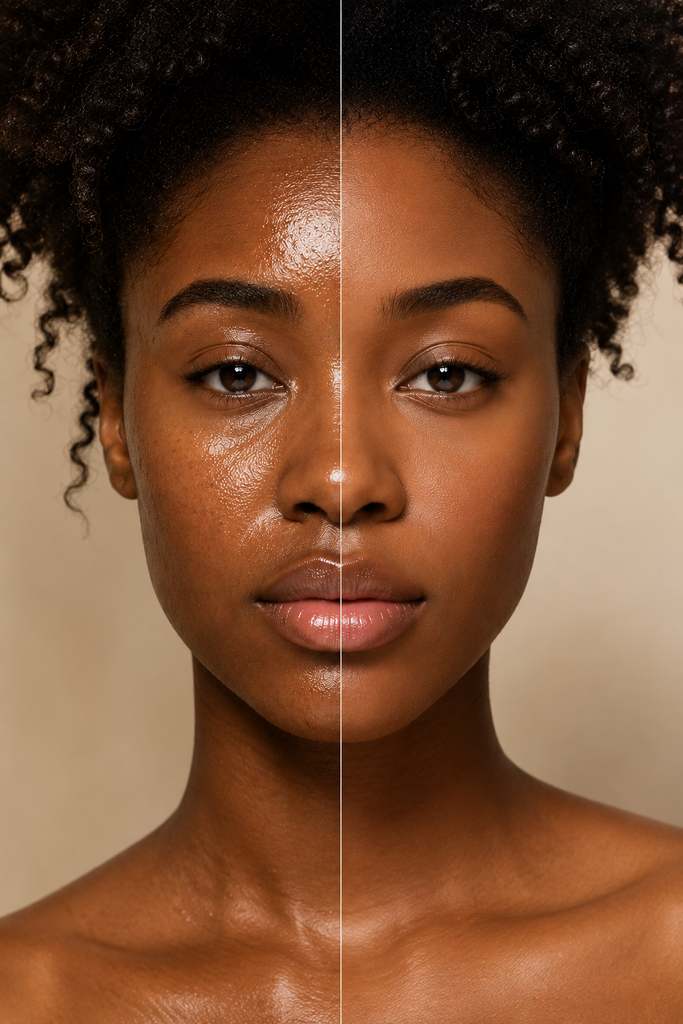
Oil and Water Are Not the Same Thing
Oiliness describes how much sebum, or oil, your skin produces.
Dehydration describes a lack of water within the upper layers of the skin.
That means someone can naturally produce plenty of oil while still having insufficient water in the skin.
Dehydrated skin may feel tight after cleansing but become shiny later. Makeup may separate. The skin may look dull despite being oily. Fine dehydration lines can become more noticeable, and sometimes the skin simply feels uncomfortable.
This is where people can get themselves into trouble.
They see oil and immediately try to remove more oil.
The cleanser gets stronger. The toner gets harsher. Moisturizer disappears from the routine.
And instead of creating healthier skin, they may disrupt the skin barrier even further.
How Do You Know What Your Skin Needs?
Pay attention to how your skin behaves, not just how it looks at noon.
If your face becomes shiny but also feels tight, rough or uncomfortable, dehydration may be part of the picture.
If products suddenly sting that previously did not, your barrier may be compromised.
If you are constantly exfoliating but your skin still looks dull, adding another acid may not be the solution.
Try simplifying the routine.
Cleanse gently. Hydrate. Moisturize. Protect.
For oily skin, this does not necessarily mean using a heavy cream. Lightweight moisturizers and hydrating formulations can provide water and barrier support without making the skin feel excessively greasy.
And yes, oily skin still needs moisturizer.
What About Drinking More Water?
Drinking adequate water is important for your overall health, particularly in a hot climate.
But drinking several extra bottles of water is not a substitute for a healthy skin barrier.
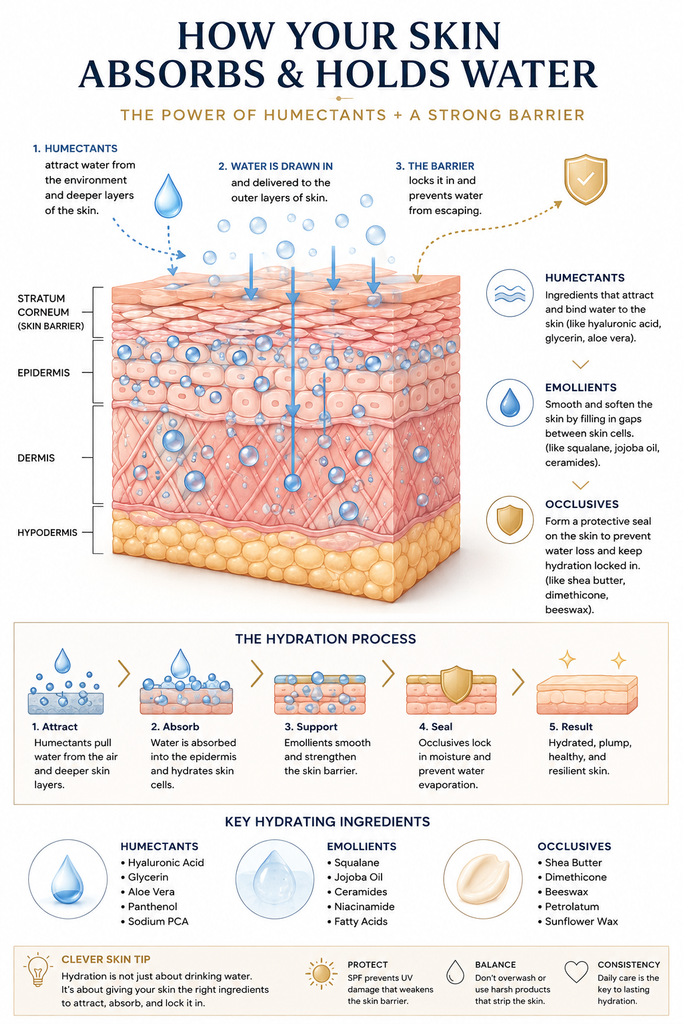
Your skin also needs to be able to hold onto water.
That is why topical hydration and moisturization matter.
Humectants attract water. Moisturizing ingredients help support the barrier. Occlusive ingredients can help reduce excessive water loss.
A good routine considers all three.
Beauty Tip of the Week
Stop trying to make your skin squeak.
That ultra tight, squeaky feeling after washing your face should not be the goal.
If you are oily, cleanse appropriately, but don’t wage war against your own skin.
Your goal is balance, not dryness.
Ingredient Spotlight
Hyaluronic Acid
Hyaluronic acid is a humectant, meaning it helps attract and retain water.
It can be particularly useful for someone who wants hydration without necessarily adding a heavy or greasy texture to the skin.
And despite the word acid, hyaluronic acid is not an exfoliating acid like glycolic or salicylic acid.
Its primary role in skincare is hydration.
For dehydrated, oily skin, that distinction matters.
Product Spotlight
Straberi 24 Hour Glow Cream
This week, we’re spotlighting Straberi 24 Hour Glow Cream because hydration should not be reserved for people who describe their skin as dry.
The objective is to give the skin moisture and support its barrier without approaching oiliness as something that needs to be stripped away.
Apply moisturizer to clean skin and adjust the amount according to your skin’s needs, environment and routine.

Ask Leslie
If my skin is oily, won’t moisturizer make me break out?
Not automatically.
Breakouts can be influenced by many factors, including excess sebum, clogged follicles, inflammation, hormones and the products being used.
The answer is not necessarily to eliminate moisturizer. It is to select a formulation appropriate for your skin.
If a particular product consistently causes congestion, reassess that product rather than concluding that your skin should never be moisturized.
Bottom Line
Oil is not water.
A shiny face does not automatically mean your skin is adequately hydrated.
And living in a humid Caribbean climate does not mean your skin cannot become dehydrated.
Before reaching for another drying cleanser, alcohol-based toner or exfoliating acid, pay attention to what your skin is telling you.
Sometimes the answer to an oily face isn’t to take more away.
Sometimes your skin needs something put back.