
By St. Paul’s News Team
September 6 2026 | International
Iran is preparing to establish a new “exclusion zone” near the Strait of Hormuz, targeting vessels it believes are attempting to transit the strategic waterway, according to the newly appointed head of Iran’s Supreme National Security Council.
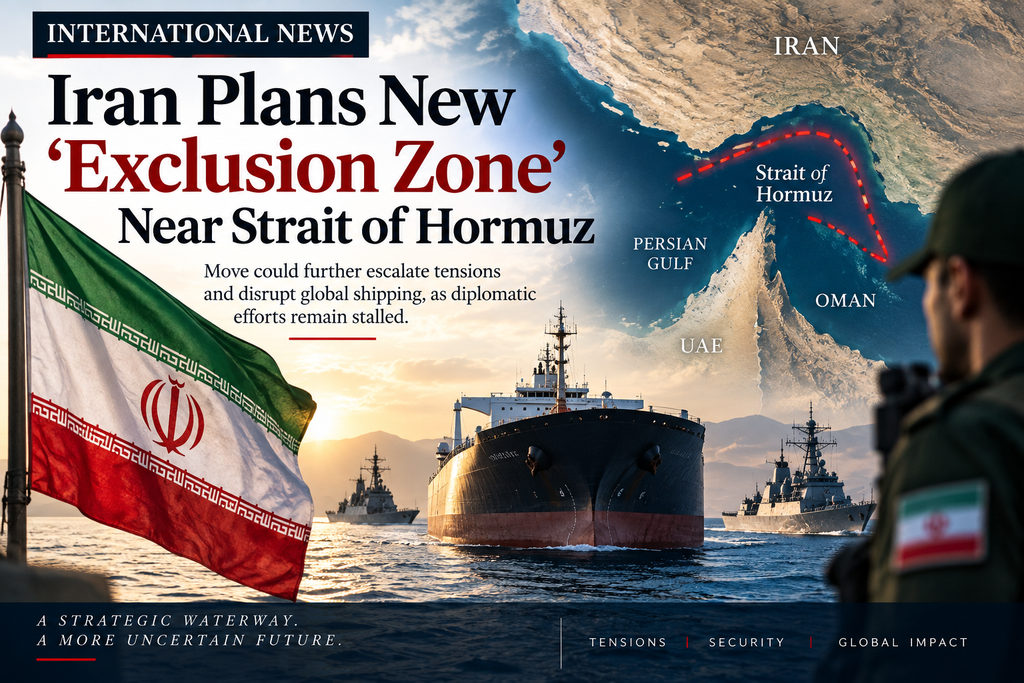
Mohsen Rezaei, speaking Sunday to Iran’s state broadcaster, said the zone is expected to be announced within the coming days or weeks. He provided few details about its exact boundaries but said it would extend from the area of the US naval blockade toward the Strait of Hormuz and into the Persian Gulf.
“Any ship that enters this area with the intention of passing through the Strait of Hormuz and is identified will be placed on our sanctions list,” Rezaei said.
The announcement came a day after the United States struck three Iranian oil tankers in response to Iranian ballistic missile attacks on US warships. Security experts described the missile launches as a significant escalation, particularly because previous Iranian attacks at sea had focused primarily on commercial shipping.
The precise location of the US blockade remains unclear. The US military has said more than 20 warships are supporting the operation, which is aimed at restricting Iranian oil exports. As of Sunday, the blockade had reportedly redirected 92 commercial vessels and disabled three others.

Tensions have continued to rise as Washington introduces additional measures intended to increase economic pressure on Tehran, while Iran maintains attacks against some vessels attempting to navigate the Strait of Hormuz.
The strategically important waterway has become a major source of leverage for Iran during the conflict, which began on February 28 with US and Israeli strikes.
Iran also claimed Sunday that it had struck an unmanned US vessel attempting to enter the Strait of Hormuz. The US military rejected the claim, describing it as a “total lie.”
The latest developments come as fighting between the two countries resumed last week following a month of relative calm. The renewed hostilities have once again focused attention on the Strait of Hormuz and Iran’s southern coastline.
At least five people were killed earlier in the week during a US bombardment. The attacks also renewed scrutiny of the conflict’s civilian toll, following an earlier strike that hit a school in Minab.
The Trump administration appears to be pursuing a two-pronged strategy, combining military action against Iranian activities around the Strait with increased financial pressure on institutions and entities involved in handling Iranian funds.
Iran’s new hard-line leadership, including Rezaei, has signalled that Tehran is prepared to withstand further pressure after decades of international sanctions. Iranian authorities have developed mechanisms to circumvent sanctions and continue selling oil despite efforts to restrict the country’s exports.
Rezaei also addressed the collapse of negotiations between Washington and Tehran, expressing distrust not only of the United States but also of countries that had attempted to mediate between the two sides.
A memorandum of understanding signed by the US and Iran in June began to unravel within days, with both sides accusing the other of violating its terms.
Rezaei said Iran had expected mediators such as Pakistan, Qatar and Oman to intervene if either side breached the agreement.
“We are now pursuing diplomacy with guarantees,” he said.
With tensions escalating around the Strait of Hormuz and diplomatic efforts stalled, the proposed exclusion zone could further complicate international shipping and increase the risks surrounding one of the world’s most strategically important maritime routes.