
By St. Paul’s News Team
September 20 2026 | Regional

Incoming Chair of the OECS Council of Ministers
Remarks by the Honourable E. P. Chet Greene
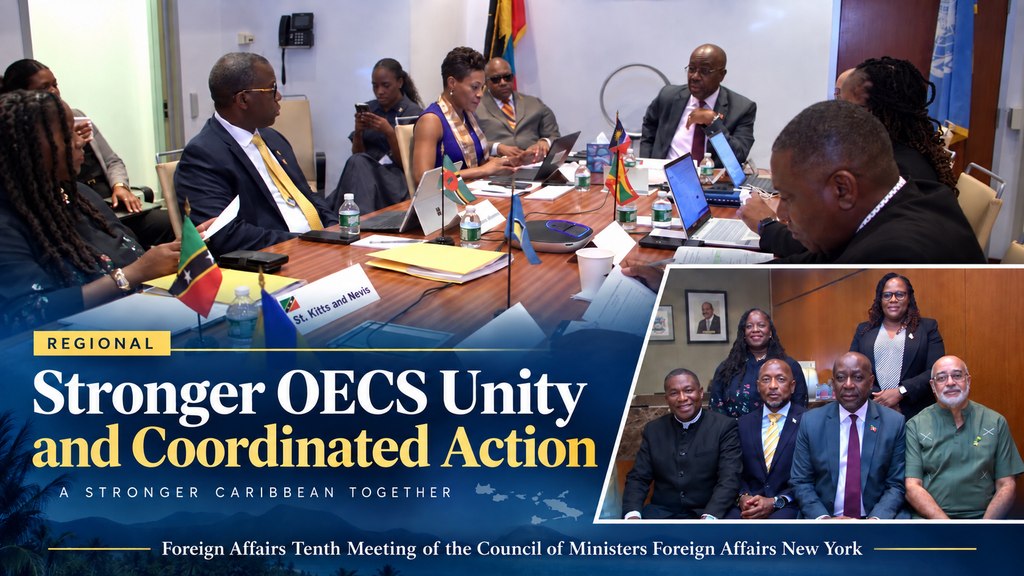
Colleague Ministers, Director General Dr Didacus Jules, members of the OECS Commission, Excellencies,
ladies and gentlemen:
I accept the chairmanship of the Council of Ministers of Foreign Affairs with gratitude for the confidence placed in Antigua and Barbuda, and with appreciation to the outgoing Chair for the stewardship of the Council.
I assume this responsibility at a time when the external environment confronting our countries is more unsettled, less accommodating and more coercive than at any point in recent decades.
Therefore, this meeting must mark the beginning of disciplined collective action.
The rules-based international trading system is being weakened by nationalist and protectionist policies.
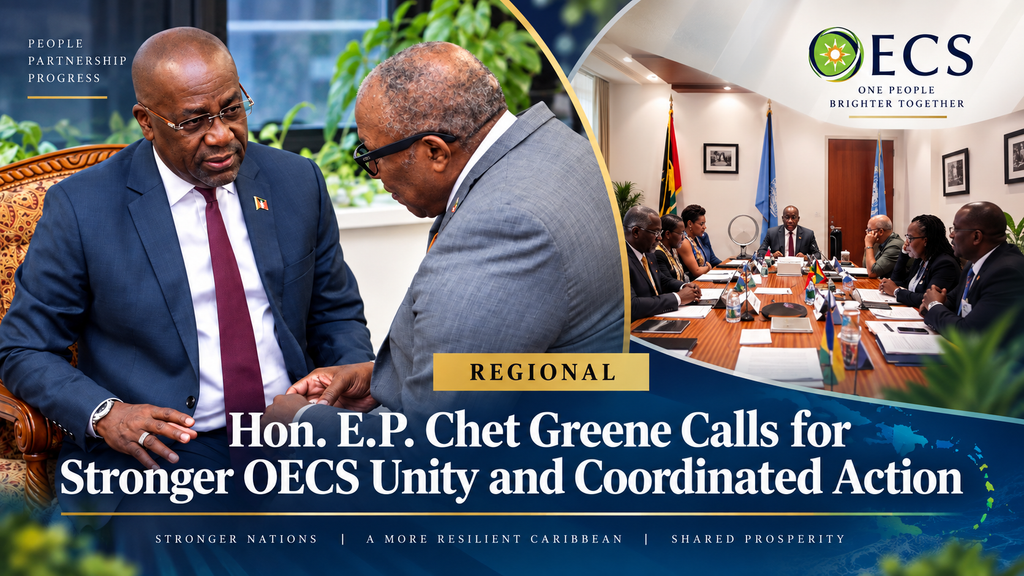
Terms of trade are tightening, supply chains remain vulnerable, and our dependence on one major market for much of our food, goods, services and transport exposes us to decisions over which we have little influence.
Visa restrictions and changing entry requirements are disrupting business, study, family life and official engagement.
At the same time, our countries face continuing pressure over legitimate development initiatives, including international financial services and citizenship by investment programmes.
We must face these realities without illusion, but not without confidence.
The OECS already possesses tools that other groups of sovereign states have spent generations trying to create.
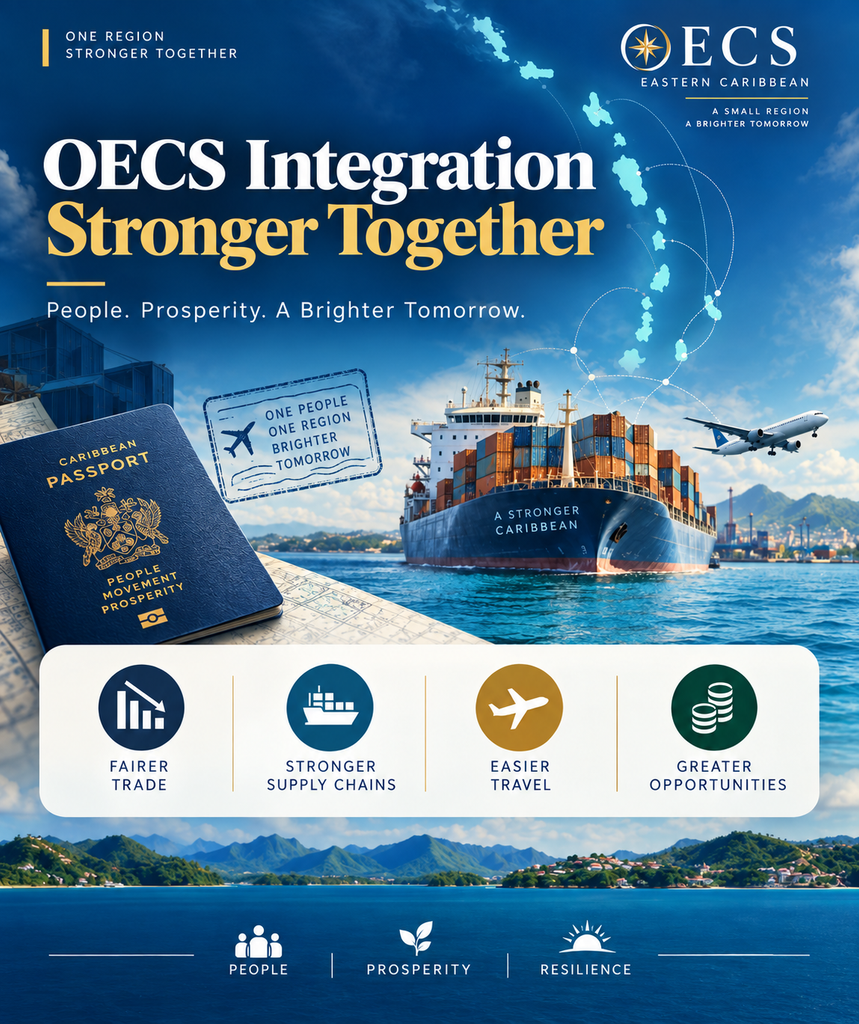
We have a single currency and Central Bank, an Economic Union with freedom of movement, a common Supreme Court, joint institutions and a long record of pooling authority where common action serves us better.
Among sovereign states, ours is one of the deepest integration arrangements in the world, second only in important respects to the European Union.
The issue is not whether we possess a platform.
It is whether we are prepared to use it fully.
First, we must expand trade in goods and services among ourselves.
The private sector should be brought into a structured partnership with governments to identify what we can produce competitively, what services we can supply across the Economic Union, and which barriers still prevent firms from treating the OECS as one domestic market.
Public procurement should, wherever lawful and practical, support capable OECS suppliers.
Standards, licensing and digital systems should be harmonised so that an enterprise established in one Protocol Member State can operate across the Union with the least possible duplication.
Second, we should build more shared institutions and services.
Seven small administrations cannot sensibly replicate every specialised unit at high cost.
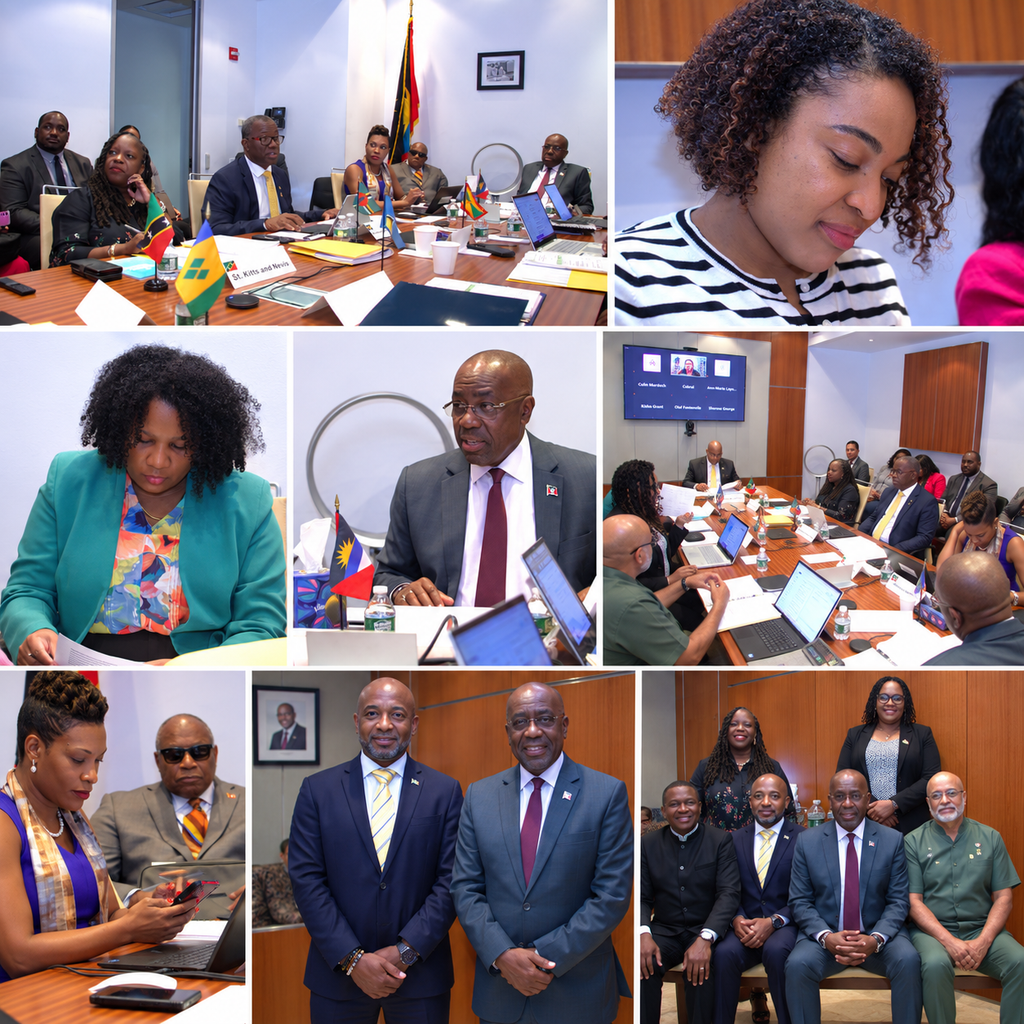
Functions that can be organised regionally should include a common pool of regulatory experts on financial services, citizenship by investment, international taxation and anti-money-laundering requirements; expanded joint procurement of medicines, equipment and technology; a regional cybersecurity capability; a team of trade specialists to prepare negotiations and secure market access; and strengthened regional statistical capacity.
Our existing common institutions prove that this approach is practical.
Where a shared service would be better, stronger and less expensive than seven separate national units, we should build it together.
Third, air and sea transportation must be treated as essential economic infrastructure.
Free movement has limited value if our citizens and goods cannot move reliably and affordably.
We need stronger air links among our islands, regular sea transport for people and cargo, and new connections to nearby markets in Central and South America.
Governments can create the policy framework, but carriers, ports, exporters, importers, financial institutions and investors must help design, finance and manage viable services.
Fourth, we must reduce excessive dependence on a single supply market.
Central and South America can provide food, manufactured goods, energy products and other essential supplies at competitive prices.
But diversification requires more than diplomatic visits.
It requires market intelligence, Spanish-language capability, shipping arrangements, payment and insurance mechanisms, business-to-business links and coordinated purchasing where scale lowers cost.
In parallel, we must strengthen food security within the OECS by matching land, water, skills, capital and markets across our countries.
No member state needs to produce everything, but together we should be able to produce and distribute much more of what our people consume.
Fifth, we should mobilise OECS capital for OECS enterprise.
Governments and private investors should form joint ventures capable of raising sufficient equity for successful businesses wherever in the Economic Union they are located.
Our savings, pension resources and financial institutions should support carefully appraised regional projects in transport, renewable energy, food production, digital services, tourism, the blue economy and manufacturing.
This must be done under sound investment rules and professional management.
Integration should give a viable enterprise access to the capital and market of the whole Union, not only the resources of its home jurisdiction.
Our response to climate change must be equally collective.
We should develop a single pipeline of bankable resilience projects; pool technical expertise for climate finance applications; coordinate insurance and disaster-risk financing; strengthen shared emergency procurement and stockpiles; and establish common resilient standards for public infrastructure.
We should also pursue joint renewable energy projects and interconnection where feasible, reducing both emissions and the imported fuel bill that weakens our competitiveness.
Access to financing is central to all of this.

Per capita income must not continue to be used as a crude reason for denying vulnerable island states concessional resources.
We should campaign together for vulnerability-based criteria, wider use of the Multidimensional Vulnerability Index, reform of development-bank eligibility rules, climate-related debt clauses and faster disbursement after disasters.
But we must also improve our capacity to move from approval to implementation.
We should consider reforming the OECS Commission to provide a regional project-preparation facility, staffed with technical, legal and financial expertise.
Such a focused unit could serve all members and ensure that available financing does not remain unused because individual administrations lack capacity.
Colleagues, foreign policy must become an instrument of this programme. I propose that we agree on a limited set of core OECS foreign-policy objectives, with rotating priorities that can be pursued intensively rather than a long list that exceeds our capacity.
These should include:
- protection of the Economic Union’s development interests;
- fair treatment of citizenship by investment and international financial services;
- climate finance and vulnerability-based access to development resources;
- coordinated diplomatic action to secure reliable and affordable air and maritime links within the OECS and with alternative markets; and
- defence of multilateralism and international law.
Agreement alone will not be sufficient.
Within a re-imagined Commission, we should establish an implementation mechanism composed of qualified diplomats and the necessary technical specialists.
It should translate ministerial decisions into work plans, assign responsibility, set deadlines, coordinate our missions and report regularly on results.

Foreign Ministers should provide political direction and review performance.
We are small enough and close enough to make this machinery agile and effective.
This approach does not diminish national foreign policy.
It gives each of our countries greater reach.
We share interests that are far greater than the matters on which our circumstances may differ.
On those shared interests, our partners should hear one clear and consistent OECS position.
We are at a moment of crisis.
There is no rescue waiting on the near or distant horizon.
If we fail to act, the maelstrom of an unhelpful global environment could reverse gains that our people have worked painstakingly to achieve.
If, however, we use the institutions we have built, pool our sovereignty where it multiplies our strength, engage our private sector as a full partner, diversify our markets and alliances, and hold ourselves accountable for implementation, the OECS can emerge more resilient, more self-reliant and more influential.
As Chair, I will work with each of you and with the Commission to turn our decisions into measurable action.
We must now summon the determination to act.
I thank you.