By Dr. A. Jerry Simon M.D
August 30 2026 | Health
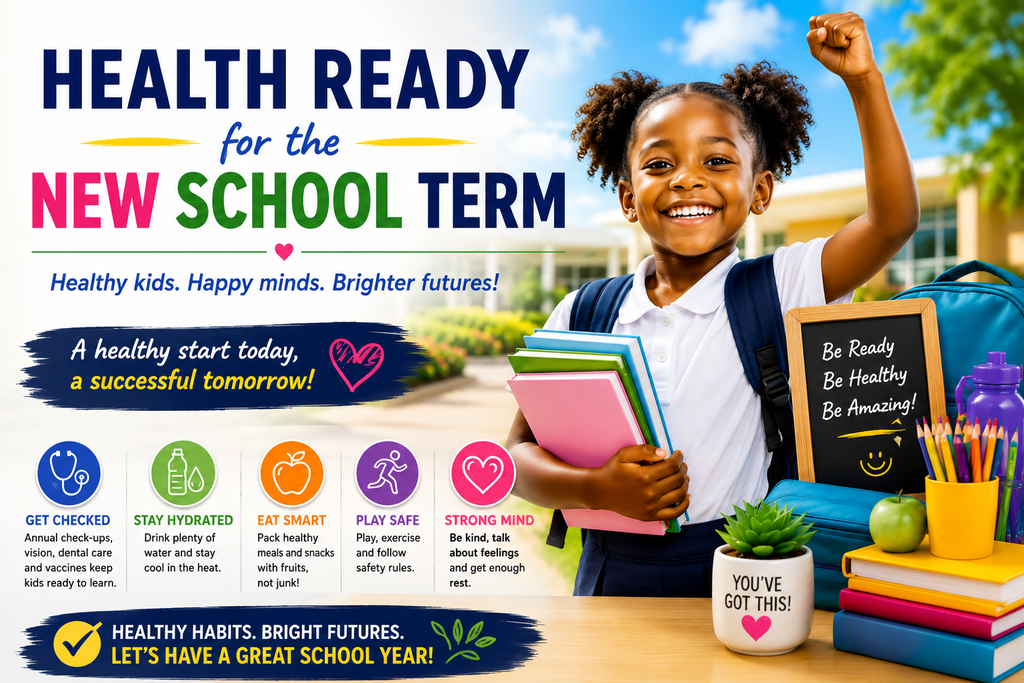
Your child’s health in school is not an accident. While you make sure that your child has the bag, books, pencils and pens, also teach your child what to do to maintain a healthy school life. And remember that health is more than physical wellness.
Getting Ready: Off the bat, it is important for your child to have a full, yearly medical check-up, including eyes and dental. You can time this for the summer before school starts or at around their birthday date. Either way, make sure that you address any health concerns that the child may have, necessary vaccines are up to date and develop a health plan for the year. Aim for prevention and early remedy if a problem is found.
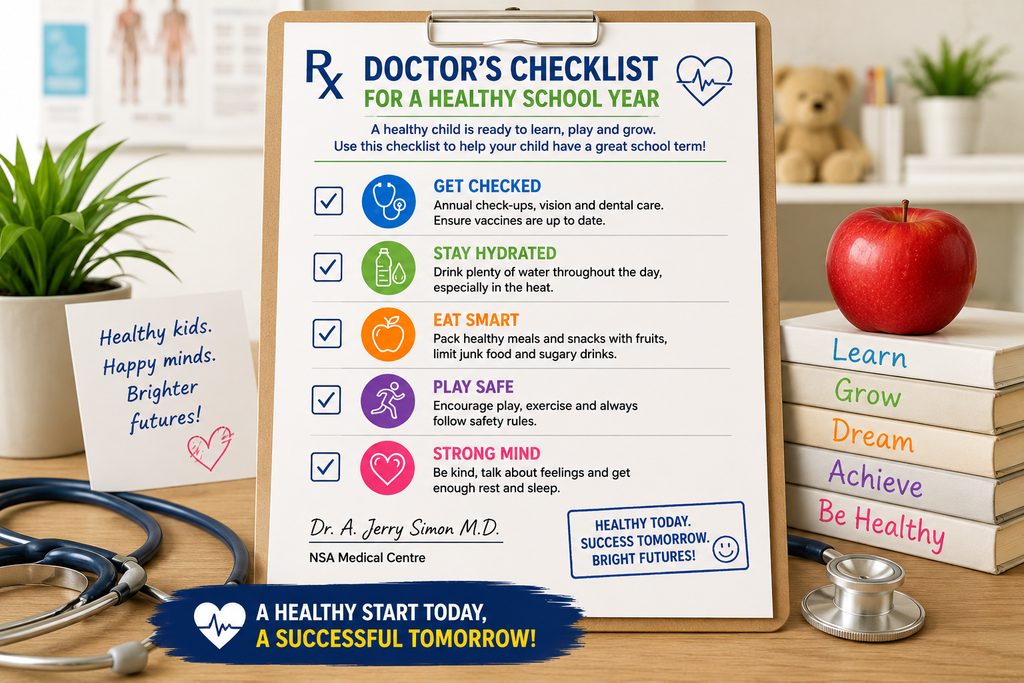
Once you are back: With our hot (and this year dry) climate, adequate hydration is essential. The exact water needs for each child may be different, so work this out with your child based on age, health status and activity pattern. When outside in the sunshine for long periods, wear hats and caps and make sure that the skin is properly hydrated with a lotion of natural material such as aloe vera, coconut oil or oat.
When children return to class from play or outdoor agriculture class, there should be adequate hand-washing stations. This is essential before eating lunch or snacks. And speaking of lunch, use insulated bags with a small ice pack to keep cold things cold. Avoid wads of mayonnaise and butter on your sandwich or salad. Go for local fruits like bananas, guavas, water melons, (mangoes for after school) which keep you hydrated and energised.
Because the mosquitos that cause dengue are generally day biters, it is important that school’s environment are not breeding-ground for mosquitoes. But also, be mindful of other vectors such as roaches and rats.
Play is important for every child, play naturally comes with some physical risk. Hence children will have to learn to play smart. Remind children not to horse-play (or skylark) near walls or on steps. Make sure they have the necessary safety equipment and know the safety guidelines for their chosen sports. And children have to avoid playing in the pick up / drop off zones.
Mental Wellbeing: Teach your child to be kind, to be a friend, and not a bully.
Talk to your child about avoiding gangs and tug-life behaviours. Give them space to talk about their feelings and help them to develop proper work-play balance. Support healthy extra-curricular activities, such as sports, music and art.
For those in secondary school, provide guidance at the time of choosing academic subjects but ultimately, they have to choose based on their own interest and aptitude. This can be critical for their long-term mental wellbeing. We have to have to take positive steps (from education to actions) to prevent our child from falling into the drug trap. Make sure that there is adequate balance with regards to electronic devices, social interaction and sleep. In order to preserve the body and mind, adequate sleep is essential but is often ignored.
Finally, something as simple as your child greeting their teachers and friends with a warm “good morning” sets a happy tone and for day. It is something we are forgetting in Antigua, but it can make a positive difference once we try it again.
Dr. Simon can be contacted at NSA Medical Centre, at (268) 462 0631 or 779 2176.