Conscious Living, Community Thriving. Cultivating a Conscious Community
By Good Humans 268
August 30 2026 | Local
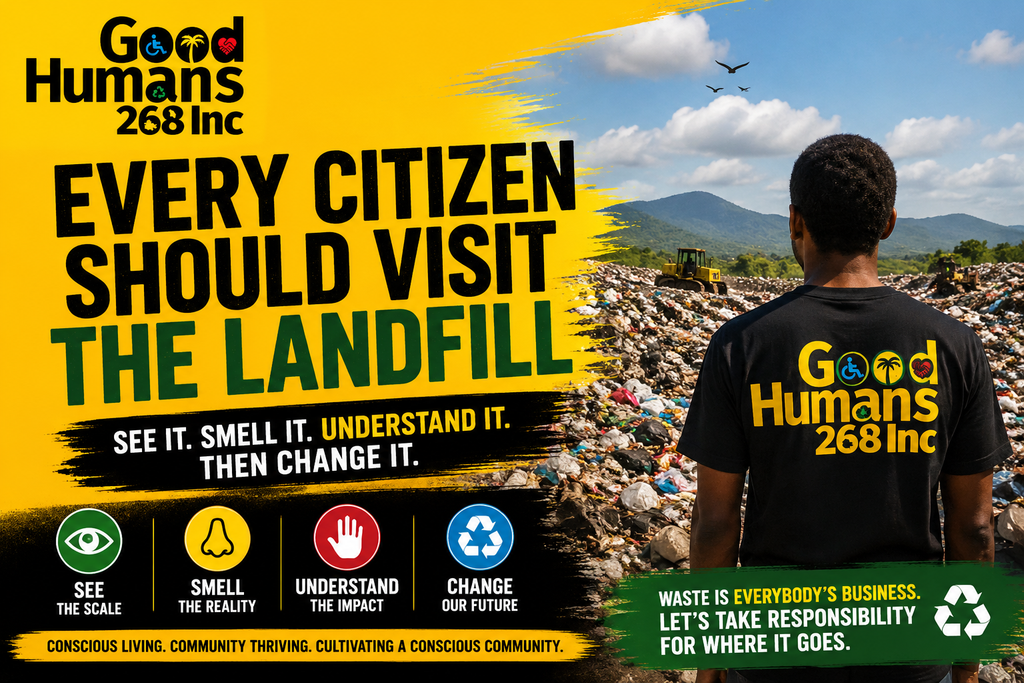
We believe that every citizen of Antigua and Barbuda should visit the landfill at least once. Not because a landfill is a tourist attraction. Not because we want people walking around waste facilities unnecessarily. But because sometimes we cannot fully understand a problem until we stand in front of it. Sometimes education requires more than a PowerPoint presentation, a social media post, a photograph or somebody telling us that we have a waste problem. Sometimes we need to see it. Smell it. Understand the scale of it. Look at what we throw away every single day and ask ourselves one simple question: Where did we think all of this was going?
We throw something into a garbage bin, somebody collects it, and suddenly it disappears from our lives. But does it really disappear? Where does our garbage go after the truck drives away? How much waste does the average household produce every week? How many plastic bottles do we throw away? How many glass bottles? How many cans?
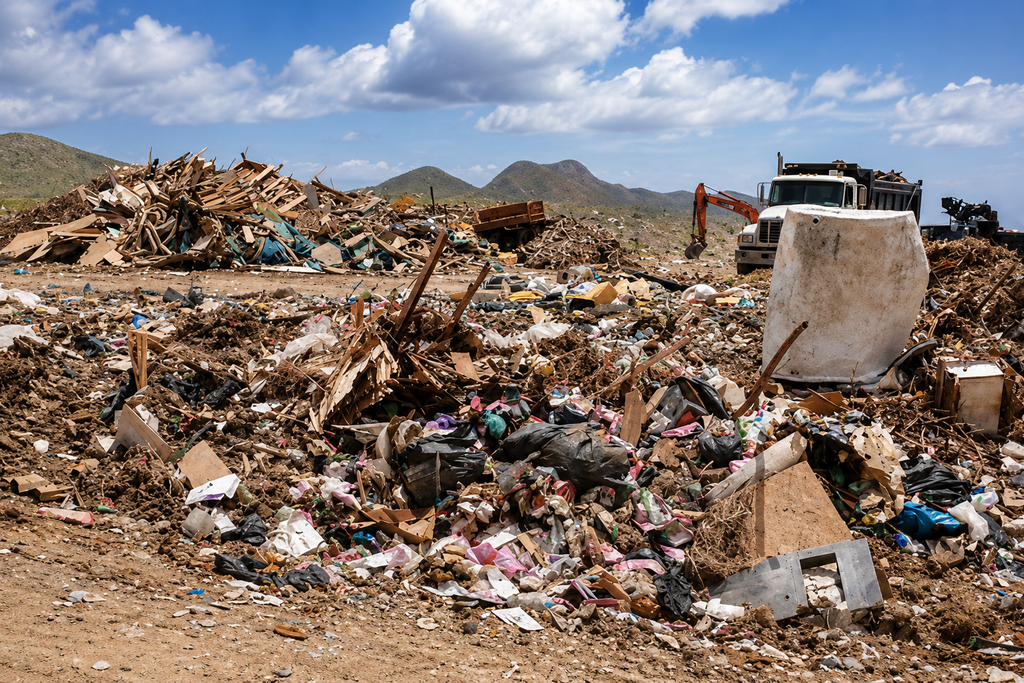
How much food? How many batteries, electronics, appliances, pieces of furniture and other materials are mixed into our waste stream? And when thousands of households, hundreds of businesses, schools, hotels, restaurants, bars, supermarkets and government offices are doing the same thing every single day, what does that look like when it all reaches one location? We need to go and see it.
We believe landfill visits should become part of field trips in our schools. We take students on educational tours to understand history, agriculture, tourism, culture and different industries, so why shouldn’t waste management be included? Imagine students learning about pollution, climate change, recycling and environmental responsibility in the classroom and then being given an opportunity to actually see where the country’s waste goes. That is discovery learning. Instead of simply telling a child, “You should recycle,” allow that child to see the alternative. Let them ask questions.
What happens to this plastic bottle? Could this have been recycled? Why is all this glass here? What happens when batteries enter the waste stream? What happens when the landfill catches fire? Could some of this food waste have been composted? What could we have done differently?
And why should this education stop with children? We believe understanding waste management should form part of our Food Handler’s Certification process. If we are preparing and selling food, we are also producing waste. Containers, bottles, cans, cardboard, food scraps, packaging and other materials all have to go somewhere. Shouldn’t someone handling food understand not only sanitation inside the kitchen but what happens to the waste leaving that kitchen? What is the point of teaching proper food handling without also discussing responsible waste handling? If businesses within the food industry generate significant amounts of waste, shouldn’t waste education be connected to how we train the people working within that industry?
We would take it even further. Basic waste-management education should form part of the process of registering a business through the Intellectual Property and Commerce Office. When establishing a business, one of the questions should be: What waste will this business generate, and how will it be managed? If we are opening a restaurant, shop, office, supermarket, bar, hotel or any other operation, where will the glass go? Where will the plastic go? What will happen to the cardboard? What will happen to the organic waste? Will anything be separated, or will everything go into one garbage bag and head straight to the landfill?
Why shouldn’t responsible waste management simply become part of doing business in Antigua and Barbuda? Businesses should also include waste education as part of new staff orientation and training. We train employees about uniforms, customer service, workplace safety, attendance, company policies and procedures, but how many workplaces explain what happens to the waste they generate? How many employees know which materials their workplace could separate? How many know where those materials can be taken? How many understand why batteries and certain other items should never simply be tossed into ordinary garbage? How many businesses have stopped to calculate how much waste they produce in a week, a month or an entire year?
Imagine what could happen if every new employee in Antigua and Barbuda received even 30 minutes of basic waste-management education when starting a job. Imagine if part of that education included seeing where our waste ultimately ends up. Would we make the same choices after seeing the consequences of those choices firsthand?
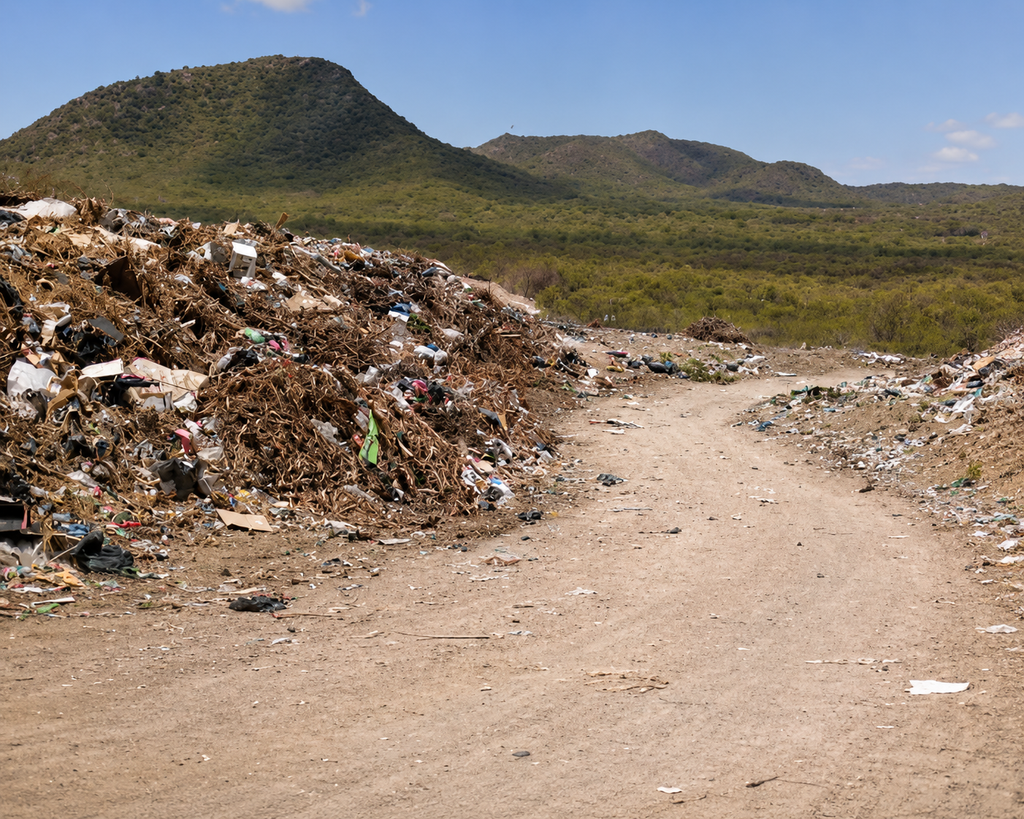
This is why, at Good Humans 268 Inc., we continue to advocate for discovery learning. People protect what they understand. People make different decisions when they understand the consequences of their actions. It is easy to throw a bottle into a garbage bag when the landfill is somewhere we have never seen. It is easy to believe waste management is somebody else’s responsibility when our relationship with our garbage ends the moment the garbage truck arrives.
But what happens when we stand there and see the mountains of material?
What happens when we realise that some of what we are looking at could have been recycled? What happens when we see materials that could have been composted? What happens when we realise that today’s garbage does not magically disappear tomorrow? What happens when we understand that every bottle, container, can, cardboard box, food scrap and garbage bag represents decisions made by individuals, households, businesses and institutions?
Maybe then the conversation changes from “Who is going to clean this up?” to “How do we stop so much of this from getting here in the first place?” That is the conversation we believe Antigua and Barbuda needs to have.
We cannot keep treating waste education as something reserved for environmentalists, sanitation workers, recycling organisations or government agencies. Waste is everybody’s business because everybody creates waste. Students create waste. Schools create waste. Restaurants create waste. Hotels create waste. Government offices create waste. Businesses create waste. Households create waste. Every sector contributes to the waste stream, which means every sector must become part of the solution.

So why shouldn’t everybody understand where it goes?
Imagine an Antigua and Barbuda where students graduate understanding waste separation. Where obtaining a Food Handler’s Certificate includes learning about responsible waste management. Where registering a business introduces entrepreneurs to their environmental responsibilities. Where businesses teach every new employee how waste should be handled. Where organisations understand their waste footprint. Where separating recyclables and organic waste becomes normal rather than exceptional. Where visiting the landfill becomes an educational experience that helps people connect their everyday choices to the bigger national picture.
At Good Humans 268 Inc., we believe changing how waste is managed requires more than collecting garbage after it has already been created. It requires education, exposure, behavioural change, better systems and ultimately stronger policies and legislation that make responsible waste management part of how Antigua and Barbuda operates. Perhaps one of the most powerful tools for changing how waste is managed in Antigua and Barbuda isn’t simply telling people that we have a problem.
Perhaps we need to let them see it for themselves. Because once we have seen where “away” actually is, throwing something away may never mean the same thing again.