
Business · Local · November 15, 2026
Empty Storefronts, Hidden Costs
Online shopping challenges Caribbean retailers.
St. Paul’s Weekly News · Business report
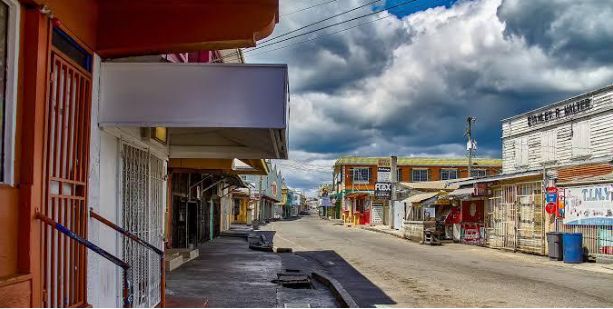
As consumers increasingly turn to international online marketplaces for convenience and lower prices, traditional retailers across the Caribbean face mounting pressure, raising concerns about jobs, local businesses and the economic future of commercial centres.
As the Christmas shopping season approaches, traditional retailers across the Caribbean are confronting an increasingly difficult question: how much of the region's festive spending will remain within local businesses, and how much will flow to international online shopping platforms?
The familiar Christmas shopping experience, characterised by crowded stores, bustling shopping districts and consumers searching for seasonal bargains, is gradually changing. With smartphones and online marketplaces providing access to international products at competitive prices, consumers can now shop from the comfort of their homes, often well before traditional sales events such as Black Friday.
The shift has transformed the retail landscape, particularly in the United States, where online shopping continues to record significant growth.
During Black Friday 2025, American consumers spent approximately US$11.8 billion online, representing a 9.1 per cent increase over the previous year. Cyber Monday generated a record US$14.25 billion in online sales.
Although physical stores continue to account for the majority of retail spending, the online sector is steadily expanding. Figures for the second quarter of 2026 show that e-commerce represented 17.1 per cent of total US retail sales, compared with 16.3 per cent during the corresponding period in 2025.
For Caribbean economies, where smaller markets and limited local retail options can make international shopping particularly attractive, the implications could be even more significant.
Changing economics of traditional retail
The challenges facing physical retailers are evident in the restructuring of major American department-store chains.
Macy’s, which operated approximately 480 namesake stores in early 2024, now lists 424 locations and has announced plans to close approximately 150 underperforming stores while investing in 350 locations it intends to retain.
JCPenney, which reached a peak of 1,106 stores in 2010, now operates approximately 650 outlets. Its contraction has been influenced by several factors, including its 2020 bankruptcy, although the changing economics of maintaining extensive physical retail networks remain an important consideration.
The Caribbean is experiencing similar pressures, with businesses in several territories adjusting their operations in response to changing consumer behaviour and economic conditions.
In Trinidad and Tobago, Excellent Stores has reduced its physical retail footprint while expanding its online presence. The Home Store has also closed outlets amid declining sales, while merchants in San Fernando have reported reduced commercial activity.
In Barbados, retailers in Bridgetown have expressed concern about consumers importing merchandise directly from overseas, contributing to weaker pedestrian traffic and reduced business activity.
Jamaica's Small Business Association reported an estimated 15 per cent decline in physical retail traffic in November 2026, alongside concerns about high rental costs, utility expenses and weak consumer demand.
While online shopping is not the only factor contributing to these developments, its growing influence is becoming increasingly difficult for traditional retailers to ignore.
Data from Jamaica in 2022 recorded 49.9 million visits to international online marketplaces, compared with 10.1 million visits to local marketplaces. Amazon was the most visited platform. Barbados recorded 21.5 million visits to international marketplaces during the same period.
Although these figures represent website visits rather than confirmed purchases or actual consumer spending, they demonstrate the significant reach of international e-commerce platforms within Caribbean markets.
Import policies and the competitive imbalance
Government policies governing personal imports have also become part of the wider retail debate.
In April 2024, Jamaica increased its duty-free personal import threshold from US$50 to US$100. The government acknowledged that the adjustment could result in annual revenue losses estimated between J$1 billion and J$1.5 billion.
By March 2026, the country's Finance Minister was raising concerns about consumers dividing their online purchases into smaller orders to remain below the duty-free threshold.
Meanwhile, Amazon has introduced free shipping to Jamaica on eligible purchases exceeding US$35, further strengthening the appeal of overseas shopping.
Supporters of these arrangements argue that they provide consumers with access to more affordable goods and greater convenience. However, questions remain about the impact on local retailers, government revenue and the broader commercial environment.
The debate is not limited to the Caribbean. The United States ended its US$800 de minimis exemption in August 2025, a move that could increase the cost of certain overseas purchases, including goods routed through US freight-forwarding services.
For Caribbean policymakers, the challenge is finding a balance between protecting consumers from excessive costs and ensuring that local businesses can compete on reasonably equitable terms.
The wider economic consequences of disappearing storefronts
The impact of declining physical retail activity extends far beyond individual businesses.
When a storefront closes, the consequences can affect employees, landlords, wholesalers, distributors, transportation providers and other businesses that depend on commercial activity.
Reduced pedestrian traffic can weaken entire shopping districts, making neighbouring businesses less viable and contributing to further closures. Vacant commercial properties may also affect surrounding property values and discourage investment.
Although online shopping creates opportunities in logistics, delivery services and digital commerce, these benefits do not necessarily replace the jobs and economic activity lost in traditional retail communities.
The result is a changing distribution of economic activity, with consumers benefiting from convenience and potentially lower prices while certain communities and workers absorb a disproportionate share of the losses.
Digital transformation as a survival strategy
For Caribbean retailers, adapting to changing consumer preferences may be essential to remaining competitive.
One potential solution is the adoption of omnichannel retailing, which combines physical storefronts with fully functional online shopping platforms.
This approach goes beyond maintaining a website that simply displays products, opening hours and contact information. Businesses must increasingly provide customers with the ability to browse merchandise, place orders, make secure electronic payments, check available inventory and arrange delivery or in-store collection.
Under this model, physical stores become part of an integrated commercial network rather than operating independently of the digital marketplace.
However, the transition presents challenges, particularly for smaller businesses with limited financial and technological resources.
A 2026 Mastercard study found that only eight per cent of small merchants in Jamaica used point-of-sale systems, while 92 per cent of consumers expressed a desire for more businesses to accept digital payments.
With approximately 11 payment terminals per 1,000 inhabitants, the findings highlight the need for greater investment in affordable payment infrastructure, technology and digital literacy.
Without these improvements, many small retailers could find themselves increasingly disadvantaged as consumer expectations continue to evolve.
Rethinking commercial policies
Governments also have a role to play in ensuring that changes in the retail sector do not undermine the wider economic environment.
The debate in Britain over introducing taxes on large retailers’ remote sales to support traditional shopping districts offers an example of how policymakers are examining the competitive relationship between online and physical businesses.
The Institute for Public Policy Research has proposed a two per cent levy on remote sales, with a one per cent rate for click-and-collect purchases. The proposed revenue would help finance reductions in business rates for traditional high-street retailers, with an exemption for the first £500,000 in annual remote sales.
The proposal reflects concerns about differences in the tax burdens carried by physical and online retailers.
Analysis by Altus Group indicates that large store-based retailers pay approximately £2.91 in business rates for every £100 in sales, compared with 34 pence for large online-only retailers.
While the British proposal may not be directly transferable to Caribbean economies, it raises an important policy consideration: governments must examine whether existing tax and regulatory arrangements create an uneven competitive environment for local businesses.
For Caribbean countries, this discussion should include fair taxation, affordable digital payment systems, support for small enterprises and strategies to revitalise commercial centres.
Could VAT-free shopping days stimulate local business?
Another proposal worth examining is the introduction of a geographically targeted, VAT-free shopping day during traditionally slow trading periods.
Such an initiative could encourage consumers to make purchases locally while providing a temporary boost to retailers and other businesses.
Saint Kitts and Nevis has operated reduced-rate VAT shopping days since 2011, while Saint Vincent and the Grenadines has also provided a precedent for VAT-free shopping initiatives.
If carefully structured, a similar programme could generate benefits throughout the economy.
Increased retail sales could support employment and business revenue directly, while suppliers, distributors and service providers could benefit indirectly from increased demand. Additional income earned by workers could then circulate through the wider economy, creating further economic activity.
However, the success of such a programme would depend on several factors, including the products selected, the level of consumer demand, the amount of additional spending generated and the potential loss of government revenue.
Policymakers would also need to determine whether consumers were making genuinely additional purchases or simply bringing forward spending they would have undertaken at another time.
Keeping the benefits of Christmas spending at home
The objective should not be to resist technological change or preserve every existing storefront. Rather, governments and businesses must work together to ensure that the transition towards digital commerce does not weaken the economic foundations of local communities.
This will require retailers to embrace technology, governments to review policies affecting competition and taxation, and consumers to recognise the broader economic implications of their purchasing decisions.
As the Christmas season approaches, the central issue is not whether Caribbean consumers will spend money, but where that spending will go and who will ultimately benefit.
Because when another storefront closes, the loss is not simply a vacant building. It represents jobs, livelihoods, investment and economic opportunities that may be difficult to replace.
The question Caribbean economies must confront is simple: When the storefront disappears, who pays the price?