By Kamalie Mannix
We Preparing Young People for the Future?
Education is often described as the foundation of national development. But if that foundation is weakening, we must have the courage to ask: are we really preparing our young people for the future? Education remains a vital pillar of our society as it remains the greatest tool of social mobility. Like myself, the great majority of Antiguans and Barbudans are educated in the public school system.
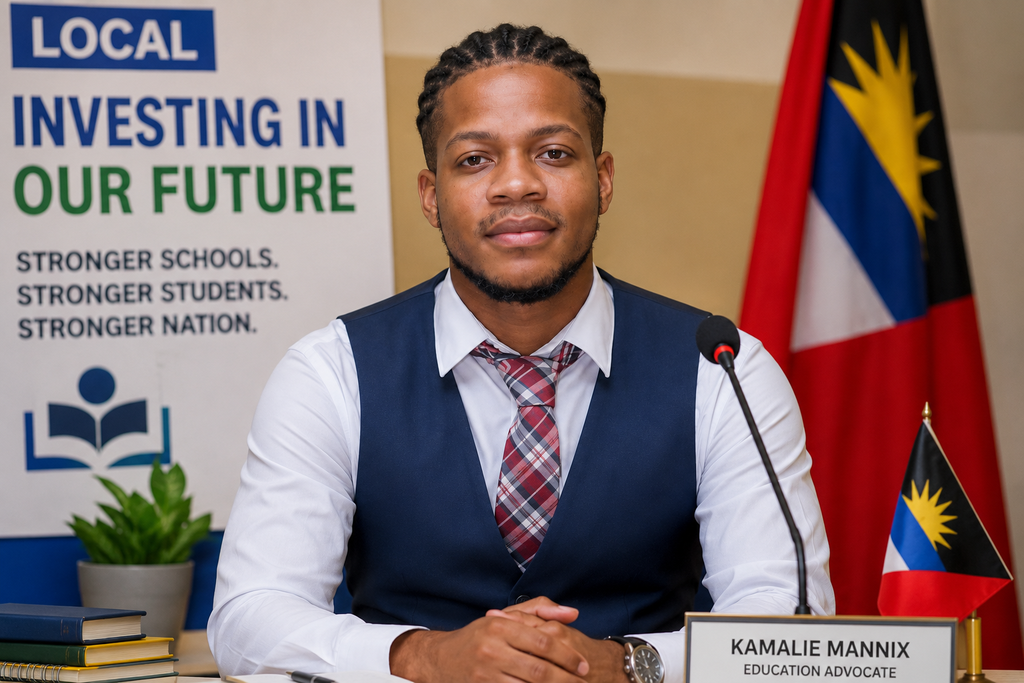
Antigua and Barbuda has made significant strides in education over the years, including universal secondary education and changes to the primary school curriculum. Yet, despite these efforts, serious challenges remain.
Across our schools, there are physical plants in need of repair, upgrading and, in some cases, completion. Some schools are overcrowded while others are under-subscribed. Many classrooms lack the technology and resources needed to support learning in a modern world. At the same time, our teachers are increasingly overworked, underpaid and underappreciated.
The consequences are becoming difficult to ignore.
Students struggle to keep pace. Parents increasingly turn to after-school classes to ensure their children remain on target. Teachers experience burnout. And perhaps most concerning, many schools see a significant difference between the number of students admitted and the number who eventually graduate. Boys, in particular, continue to face worrying dropout rates.
We must therefore ask whether the changes we have made to our education system are producing the results we intended.
This conversation must also extend to the Caribbean Secondary Education Certificate (CSEC) examinations. At this year’s CSEC press conference, officials from the Ministry of Education reported a decline in examination success. While examination results should never be the sole measure of educational quality, declining performance should cause us to pause and examine the system as a whole.
Perhaps it is time to rethink how we assess our young people.
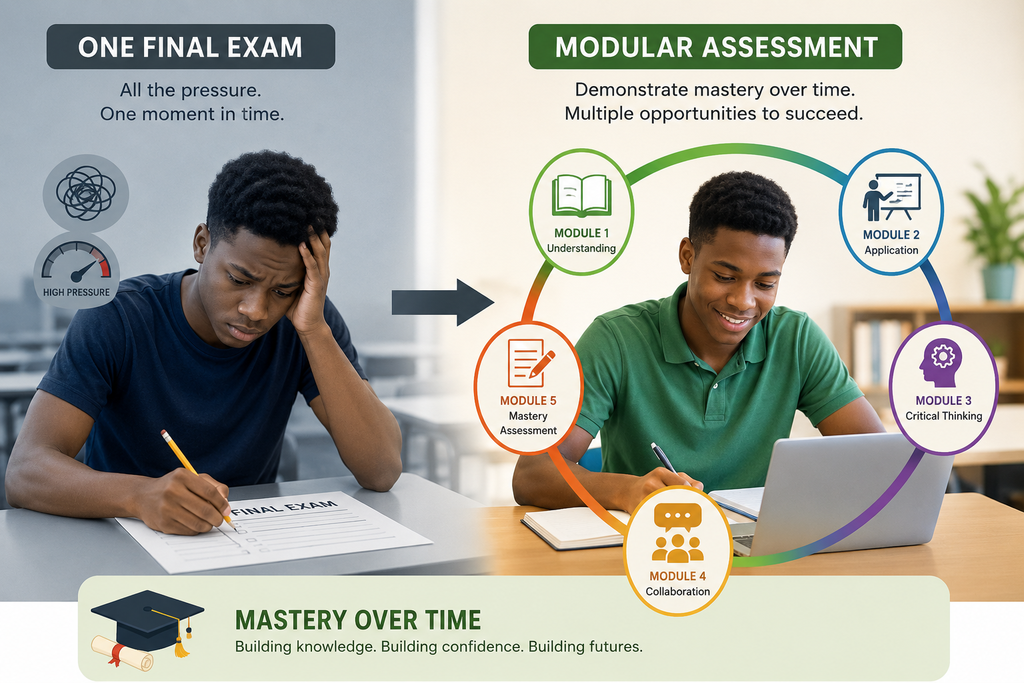
A system built around one final examination does not necessarily measure the full ability of a student. We should explore modular assessments, allowing students to demonstrate mastery of different areas of a subject over time rather than placing the weight of their performance on one examination period.
Our syllabi should also place greater emphasis on understanding, application, critical thinking and mastery of content, rather than simply memorizing information and reproducing it in an examination room.
But there is an important caveat: we cannot reform CSEC while ignoring the conditions in which students are expected to succeed.
If our education system is not operating at maximum capacity, changing the examination system alone will not solve the problem.
We need an honest national conversation about education.
I propose the establishment of a State of Education Conference, bringing together students, teachers, parents, principals, the Ministry of Education, trade unions, the business community and CSEC representatives. Together, these stakeholders should examine the state of our education system, identify what is working and what is failing, and develop a practical pathway towards meaningful reform. Our young people deserve an education system that does more than prepare them to pass an examination. They deserve an education that equips them with the knowledge, skills, creativity and confidence to become masters of their own destiny and meaningful contributors to national development.
Education reform cannot simply be another policy announcement. It must become a national priority.
Our young people deserve better. And if we truly love this nation, we must be willing to build the education system they deserve.