
Breast Skin Changes Deserve Attention Too.
By Leslie Nesbitt
October 18 2026 | SKINTIPZ — Volume 43
BREAST AWARENESS | NOTICE THE CHANGE. TAKE THE NEXT STEP.
When we talk about breast cancer awareness, the first thing many people think about is a lump. That matters. But the conversation should include the skin too.
At SKINTIPZ, we spend time understanding the surface: texture, color, irritation and changes that deserve attention. This October, let us extend that awareness beyond the face.
During St. Paul’s Health Month, our message remains:
Know Your Numbers.
Own Your Health.

Owning your health also means noticing something unfamiliar and making the appointment to understand it.
A Change Is a Reason to Ask
A rash is not a cancer diagnosis. A patch of dry skin is not proof of something serious. Breast changes can have non-cancerous causes. [3]
But it is easy to label an unexplained change as irritation, try a cream and move on. The question to ask is: Is this normal for me?
If the answer is no, do not make a cosmetic explanation your final answer.
This week: notice the change, then take the next step.
Clinical Insight
Knowing when to refer is part of responsible skincare. An unexplained breast change deserves medical attention.
1 | A New Change in Texture
New dimpling, puckering or skin that looks pitted like an orange peel deserves evaluation. This is different from simply noticing ordinary pores.
The orange-peel appearance is called peau d’orange. It can occur when fluid builds up in breast skin. One possible cause is inflammatory breast cancer, a rare, fast-growing form that may not produce a lump you can feel. [1]
These signs can also occur with other conditions. Do not use a photograph online to decide the cause; contact a clinician promptly.
2 | Swelling or a Color Change
A breast that suddenly becomes larger, swollen or unusually heavy needs attention, particularly with a new skin color change. Inflammatory changes may look pink, reddish-purple or bruised. [1]
Redness can be harder to see on brown or Black skin. Notice warmth, swelling, tenderness and a difference from your usual appearance too. [4]
Seek urgent medical advice for a painful, warm or swollen breast. Fever or feeling unwell makes prompt care especially important. Infection is one possible cause and also needs treatment. [4]
3 | A Persistent Nipple Rash
Itching, flaking, crusting or thickened skin on the nipple or areola should not be repeatedly treated without understanding the cause.
Eczema and irritation are possibilities. A rare cancer called Paget disease of the breast can resemble these conditions, which is why a persistent or unexplained nipple change needs assessment. A clinician may recommend imaging or a biopsy. [2]
Do not keep switching creams while the same problem continues. Make the appointment and explain what you have already tried.
4 | A Nipple or Shape Change
Report a nipple that newly pulls inward, an unexplained change in breast size or shape, or nipple discharge other than breast milk, especially blood. A new breast or underarm lump also needs checking. [3]
A longstanding feature and a new change are different conversations. Tell your clinician what is usual for you and what has changed.

Men Need This Message Too
Men can develop breast cancer. A new chest lump, nipple discharge, nipple retraction, or scaling of the nipple or breast skin should be evaluated rather than dismissed. [5]
Clinical Insight
A referral is an action, not an alarm.
As an esthetician, my role is to recognize the limits of cosmetic care. I can observe a change. I cannot diagnose what is happening within breast tissue.
The responsible response may be: Before we treat this as a skincare concern, please have it medically assessed.
That recommendation is not a prediction of bad news. It is a way to help you get the right answer.
Awareness and Screening
Knowing your normal helps you notice symptoms. It does not replace mammography or other screening recommended for your age and individual risk. Mammograms can find some cancers before a change is visible or can be felt. [6]
Screening is for people without symptoms. If you notice a new change, describe it when booking care so the team can arrange the appropriate assessment. Do not simply wait for your next routine screening date. [6]
Beauty Tip of the Week
Make room for awareness.
We notice a new mark on our face almost immediately. Give the rest of your skin that same attention, without turning the mirror into a source of fear.
If you notice a change, note when it began, where it is and whether it is progressing. Tell your clinician about accompanying symptoms and products you have used. A dated photograph may help you describe the change; it should not delay care.
Care Spotlight
A clear next step.
This week, the most useful addition to your routine may be an appointment. Before leaving, ask:
What happens next? Who will contact me? When should I follow up?
If imaging or another assessment is recommended, keep track of the appointment and the result. Awareness becomes useful when it leads to action.

Ask Leslie
What if it does not hurt?
Pain is not required for a concerning breast change. Have a new unexplained change checked rather than using comfort as reassurance. [3]
What if my last mammogram was normal?
Still report the change. A normal previous result does not explain a new symptom. Your clinician can decide which examination or tests are appropriate now. [6]
Bottom Line
Breast awareness is more than looking for a lump. Skin texture, swelling, nipple changes and an unfamiliar appearance can all start a conversation with a healthcare professional.
Know your normal. Speak up about change. Follow through.
Know Your Numbers. Own Your Health.
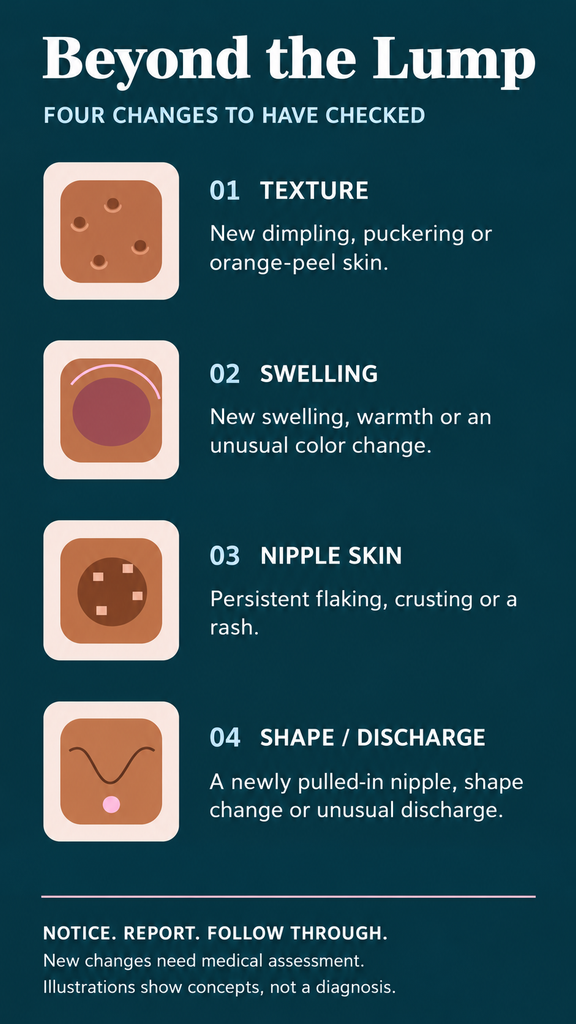
Beyond the Lump — Four Changes to Have Checked
01 TEXTURE
New dimpling, puckering or orange-peel skin.
02 SWELLING
New swelling, warmth or an unusual color change.
03 NIPPLE SKIN
Persistent flaking, crusting or a rash.
04 SHAPE / DISCHARGE
A newly pulled-in nipple, shape change or unusual discharge.
NOTICE. REPORT. FOLLOW THROUGH.
New changes need medical assessment. Illustrations show concepts, not a diagnosis.
Sources
[1] NCI: Inflammatory Breast Cancer.
[2] NCI: Paget Disease of the Breast.
[3] CDC: Symptoms of Breast Cancer.
[4] NHS: Breast Abscess.
[5] ACS: Breast Cancer in Men, Signs and Symptoms.
[6] CDC: Screening for Breast Cancer.
cancer.gov/types/breast
cdc.gov/breast-cancer
nhs.uk
cancer.org
LESLIE NESBITT
SKINTIPZ columnist
Founder of USI and Straberi Skincare