
Conscious Living, Community Thriving. Cultivating a Conscious Community
By : Good Humans 268 Inc.
October 18 2026 | Local News | Good Humans
What does it take to turn thousands of discarded bottle caps into Commonwealth flags? It takes more than glue, colour and a design. It takes people who are willing to show up, share a task and believe their contribution matters. Tomorrow, Monday, 19 October, Good Humans 268 Inc. begins flag making at the Botanical Gardens, with activities running from 8:00 a.m. to 4:00 p.m. daily. With CHOGM two weeks away, we are inviting our community to help create a welcome that carries a story of environmental responsibility and inclusion.
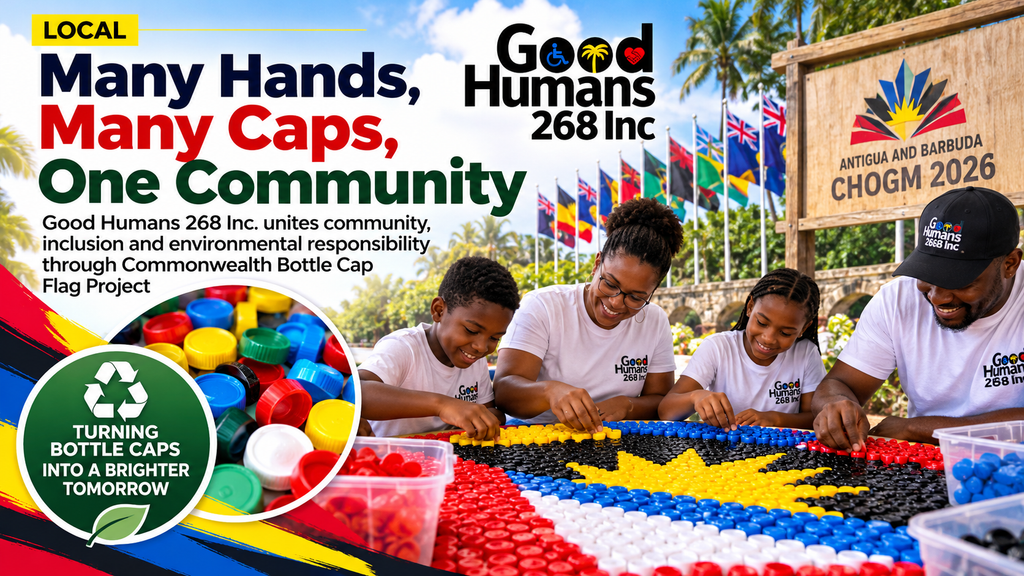
The Commonwealth Bottle Cap Flag Project brings an international occasion into reach through a familiar object. A cap from a drink becomes something a child can identify, sort and see within a larger picture. A parent can explain why it was collected. A teacher can connect its colours to a country and its journey to a conversation about waste. Someone who has never attended a summit can still help prepare a meaningful contribution. That is the strength of community projects: they create practical ways for people to participate.
Our aim is to create the other 54 Commonwealth flags. Behind that ambition are many smaller tasks that deserve equal respect. Caps must be collected and prepared. Colours must be organised. Designs require attention. Materials need careful handling. Progress depends on coordination and patience as much as enthusiasm. When we admire the completed work, we should remember the people whose contributions may be difficult to see. Community achievements often rest on quiet effort, repeated steadily, long before the photographs are taken.
This project also invites us to reconsider what makes a community welcoming. An invitation alone does not guarantee participation. Someone may need a seated task, clear instructions, a manageable pace or assistance reaching materials. Another person may contribute through organising, communicating or helping someone understand the next step. We should ask people what enables them to participate and listen to their answers.
Inclusion becomes practical when we move beyond assuming that one arrangement works for everyone. The quality of our welcome is reflected in the choices people actually have.

Persons with disabilities belong in this work as neighbours, contributors and leaders. Our involvement should never be treated as decoration for a message about kindness. We have ideas about how activities should be organised and knowledge that can improve them. We also have the right to enjoy community life without being expected to inspire everyone around us. Recognising the beauty of individuals with disabilities means recognising whole people: our abilities, preferences, personalities and boundaries. A conscious community respects both what someone offers and what someone needs.
There is a similar need for attention in how we handle waste. A cap left beside a drain may seem like a small concern, but carelessness becomes visible when many individual decisions accumulate. Collective responsibility can accumulate too. One household separates materials. One student reminds a friend. One organisation changes a routine. One volunteer gives time. None of these actions completes the work alone, yet each can help establish a different expectation. We begin to build a culture in which looking after shared spaces is part of belonging.
The Botanical Gardens will give us a place to practise that responsibility together. Families can turn a conversation about litter into a shared activity.
Young people can discover the patience involved in producing something carefully. Organisations can contribute through participation and cooperation. People meeting for the first time can work towards a common result. There is value in creating occasions where generations and experiences meet. We learn things about one another when we share a task that we may never learn from passing each other on the street.
With CHOGM approaching, we naturally think about how Antigua and Barbuda will be seen. But our own experience of preparing matters just as much. Will our children feel that they helped? Will persons with disabilities find meaningful opportunities to participate? Will the environmental message influence what we do after the flags are finished? These questions help us measure success beyond appearance. A beautiful display can attract attention for a moment. A community that develops stronger habits of cooperation and inclusion can carry those benefits into everyday life.
We are inviting you to be part of that effort, starting tomorrow at the Botanical Gardens, from 8:00 a.m. to 4:00 p.m. daily. Come prepared to learn, contribute and respect the people working beside you. Help us show the beauty that can emerge from discarded materials and the strength that grows when people participate together. Every cap needs a place within the design. Every person deserves a place within community life. As we prepare our Commonwealth flags, let us practise the care, cooperation and belonging we want those flags to represent.