
By Leslie Nesbitt | Skin Expert
September 6 2026 | Lifestyle
If you’ve been paying attention to skincare lately, you may have noticed four letters appearing everywhere:
PDRN.
Serums. Creams. Masks. Professional treatments. Korean skincare.
And then there is the headline that made everyone pay attention:
“Salmon DNA.”
But before you order another viral product, let’s understand what you’re actually putting on your skin.
What Is PDRN?
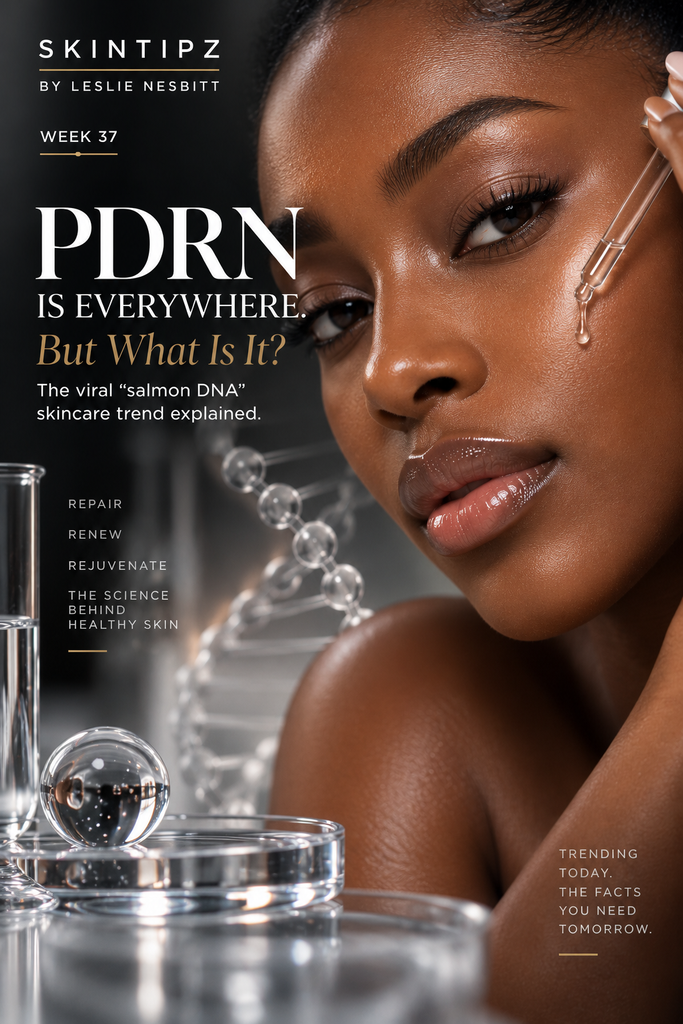
PDRN stands for polydeoxyribonucleotide.
It consists of purified DNA fragments and has roots in regenerative medicine. Traditionally, much of the PDRN used in aesthetic applications has been derived from salmon or trout DNA.
Its clinical history helped propel it into Korean aesthetic treatments, and now the beauty industry has taken that science and moved it into everyday skincare.
PDRN has become so prominent that Vogue identifies regenerative ingredients such as PDRN and exosomes as a defining K beauty movement for 2026.
Why Is Everyone Talking About It?
PDRN is being investigated and marketed for benefits associated with:
- Skin recovery
- Hydration
- Inflammation
- Collagen support
- Skin texture
- Overall rejuvenation
But here’s where SKINTIPZ comes in.
A PDRN cream is not the same as a PDRN injection. How an ingredient is delivered into the skin matters. A topical product primarily works at or through the skin barrier, while injectable PDRN is delivered directly into the skin by a qualified medical professional.
In my clinical practice at LAVISH, we use PDRN as part of professional skin rejuvenation treatments when appropriate. I see it as a great example of why we have to look beyond the trending ingredient and understand the delivery method, formulation, and individual skin concern.
Same ingredient. Different delivery. Different approach.
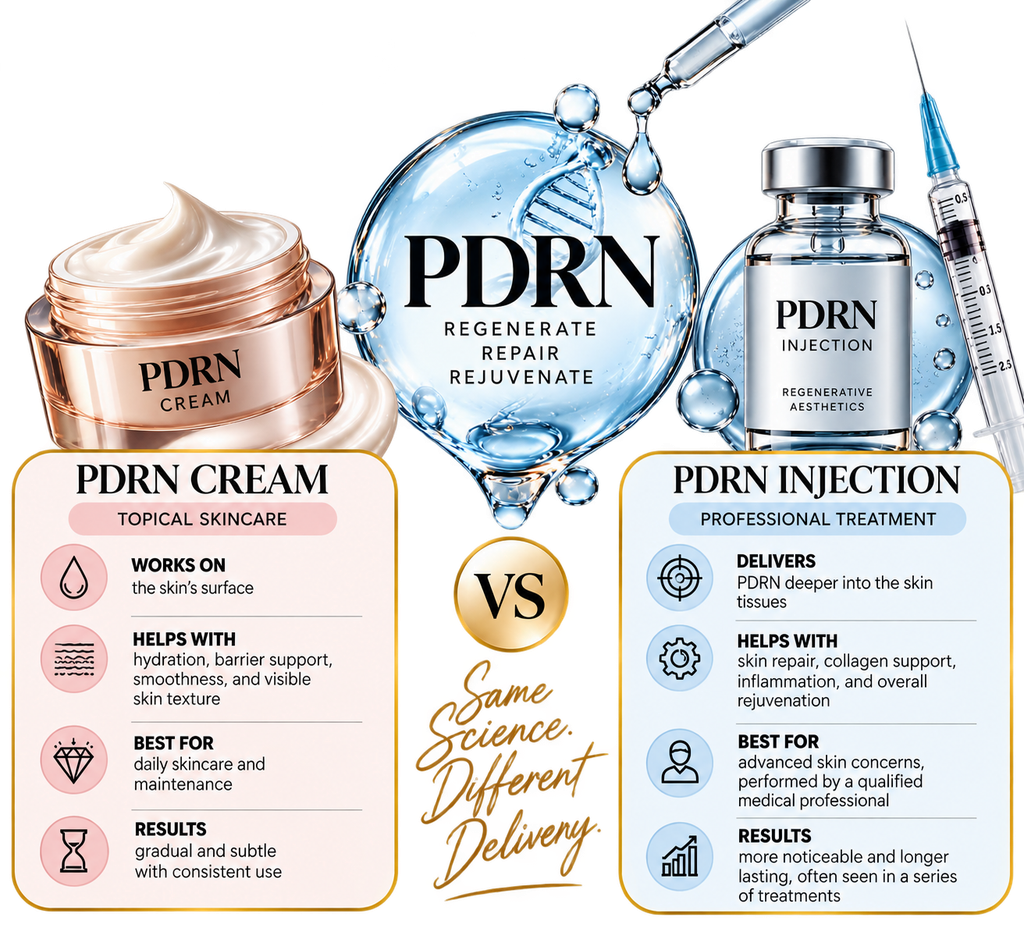
PDRN Cream vs. PDRN Injection
PDRN Cream — Topical Skincare
Works on:
The skin’s surface
Helps with:
Hydration, barrier support, smoothness, and visible skin texture
Best for:
Daily skincare and maintenance
Results:
Gradual and subtle with consistent use
PDRN Injection — Professional Treatment
Delivers:
PDRN deeper into the skin tissues
Helps with:
Skin repair, collagen support, inflammation, and overall rejuvenation
Best for:
Advanced skin concerns, performed by a qualified medical professional
Results:
More noticeable and longer lasting, often seen in a series of treatments
What About Vegan PDRN?
Now there’s another twist.
Plant and biotech alternatives marketed as vegan PDRN are emerging as brands move away from salmon-derived sources. Consumer interest in vegan PDRN has reportedly increased sharply on TikTok.
Again, the important question isn’t simply whether something says PDRN on the bottle.
Ask:
What is the source?
What is the formulation?
What evidence supports the claims?

Beauty Tip of the Week
Don’t buy the trend. Understand the ingredient.
Before adding any viral active to your routine, ask yourself:
What am I actually trying to treat?
If your concern is acne, pigmentation, dehydration or sensitivity, choose ingredients and treatments based on that concern rather than whatever happens to be trending this week.
Ingredient Spotlight
PDRN
PDRN is undoubtedly one of the ingredients to watch in 2026.
Its move from regenerative medicine into mainstream skincare is part of a much larger trend toward clinic-inspired beauty. Vogue and Allure are also tracking ingredients such as exosomes and ectoin as consumers increasingly look for skincare that sounds and behaves more like biotechnology.
But promising science should still be separated from promising marketing.
Bottom Line
PDRN may be one of 2026’s biggest skincare trends.
And it may ultimately become much more than a trend.
But good skincare education means being excited about innovation without getting carried away by it.
Learn the science. Question the claims. Then decide whether the trend actually belongs on your skin.

Ask Leslie
Should I throw away my regular skincare and start using PDRN?
Absolutely not.
Your cleanser didn’t suddenly stop working because TikTok discovered DNA.
Neither did your sunscreen.
A good skincare routine still begins with appropriate cleansing, hydration, barrier support, sun protection and evidence-based treatment for your individual concerns.
New technology can complement good skincare.
It doesn’t replace the fundamentals.
SKINTIPZ by Leslie Nesbitt
Beauty & Skin Science Column
Beauty Expert
Founder of USI & Straberi Skincare