
By Garfield Joseph
August 30 2026 | Business

Many people know what it feels like to worry about money. Financial obligations, family responsibilities, loan payments, school expenses, rent, mortgages, and the constant challenge of making ends meet can create significant pressure. A recent article published on Simply Psychology explores the connection between financial stress and mental health, reminding us that money problems are often about more than finance alone. Left unresolved, they can lead to serious emotional and psychological challenges.
The author explains that financial stress is one of the leading contributors to anxiety and depression. When people are constantly worried about paying bills, supporting their families, or managing debt, those concerns can dominate their thoughts. Research has shown that financial pressure affects concentration, decision-making, problem-solving and overall emotional well-being. In many instances, people become trapped in a cycle where financial challenges create stress, and that stress makes it more difficult to make sound financial decisions that could improve their situation.
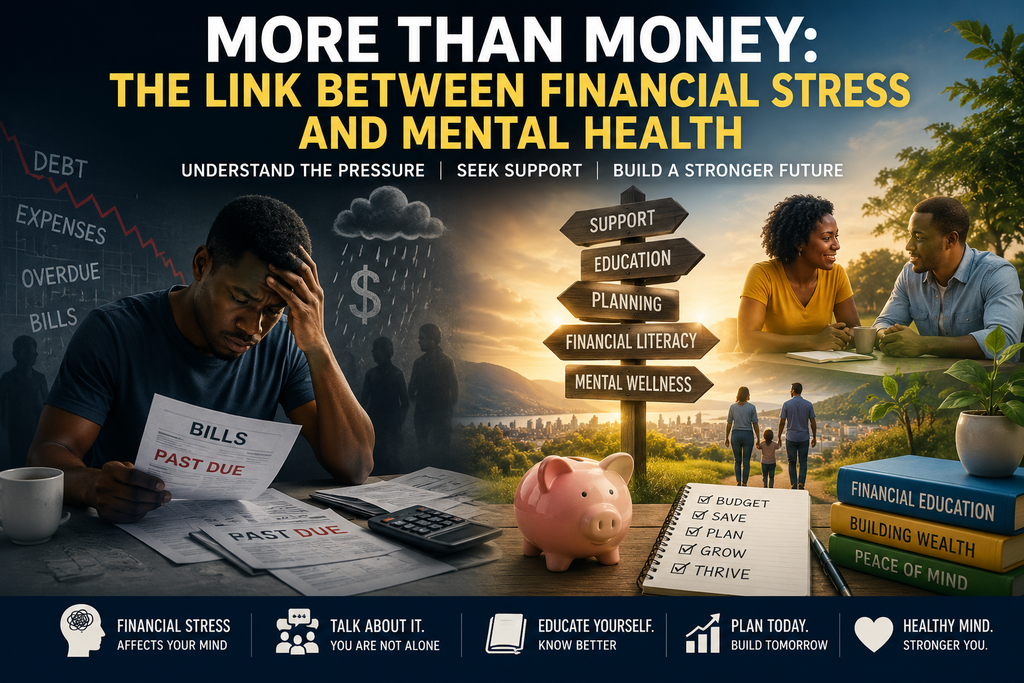
The article also highlights an important reality: the relationship between finances and mental health is a two-way street. Financial hardship can contribute to anxiety, depression, and emotional distress. At the same time, mental health challenges can make it harder for individuals to work effectively, manage their finances, create budgets, and plan for the future.
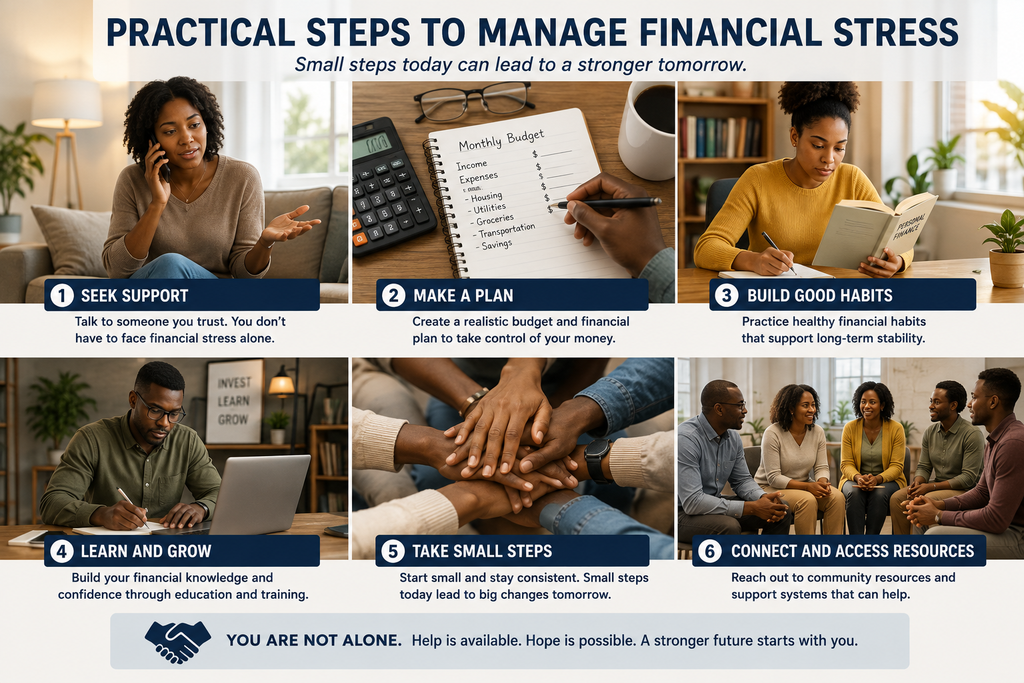
What the Author Recommends
The author emphasizes that individuals experiencing mental health challenges as a result of financial difficulties should not suffer in silence. Seeking support from trusted family members, friends, counselors, financial advisors, and mental health professionals can make a meaningful difference. Open conversations about financial struggles can reduce feelings of shame, isolation, and hopelessness.
Recommend Steps
- Seek emotional and mental health support when financial stress becomes overwhelming.
- Develop a realistic budget and financial plan.
- Learn healthy financial habits that support long-term stability.
- Build financial knowledge and confidence through education and training.
- Take small, manageable steps toward financial recovery rather than trying to solve everything at once.
- Connect with support systems and community resources.
An Antigua and Barbuda Perspective
These lessons are especially relevant for the average citizen of Antigua and Barbuda. Whether you are a young professional seeking financial independence, a parent trying to provide for your family, a worker dealing with rising expenses, or a small business owner navigating economic uncertainty, financial stress can affect anyone.
The encouraging news is that support is available. Programmes such as the Entrepreneurial Development Programme (EDP), and the ABIA, along with initiatives offered by other financial institutions, and community organizations, continue to equip entrepreneurs and aspiring business owners with training, mentorship, networking opportunities, and practical business skills. Such initiatives help individuals build sustainable income streams, strengthen businesses, and develop greater financial resilience.
Equally important are financial literacy programmes offered by various institutions and organizations. Training in budgeting, saving, debt management, investing, and business planning gives people the tools needed to make informed financial decisions.
Financial literacy does not eliminate every challenge, but it empowers individuals to respond to challenges with greater confidence and competence.

Educational information, including articles such as the one summarized here, also plays a vital role. Information creates awareness. Awareness leads to understanding. Understanding often becomes the first step toward positive action.
How Can Readers Access Support?
If you are experiencing financial stress, remember that you do not have to face it alone. Taking the first step and asking for help may be one of the most important decisions you make.
Family, Friends, and Community Networks
Many people hesitate to discuss financial difficulties because they feel embarrassed or fear being judged. Yet trusted family members, friends, church leaders, community mentors, and support groups can provide encouragement, guidance, and perspective during difficult times. Strong support networks can help reduce the emotional burden associated with financial stress.
Mental Health Professionals
If financial worries are affecting your sleep, work performance, relationships, or overall quality of life, consider speaking with a counselor, psychologist, or other qualified mental health professional. Seeking support early can prevent emotional challenges from becoming more severe.
Financial Literacy and Financial Counseling

Many financial problems can be improved through better planning and increased financial knowledge. Individuals should take advantage of workshops, seminars, counseling services, and educational programmes offered by banks, credit unions, businesses, and community organizations. Financial education can help people better manage financial worries and improve their overall well-being.
Entrepreneurial Development Programmes
People seeking additional income opportunities should explore entrepreneurial support programmes such as the EDP and the ABIA. Through training, coaching, and mentorship, participants gain practical tools to start, grow, or improve their businesses and strengthen their financial future.
Continuous Learning
Books, articles, podcasts, workshops, and online resources can help individuals improve both their financial management skills and their understanding of mental wellness. Knowledge remains one of the most powerful tools available to anyone seeking positive change.
The Key Message
The central message is clear: financial health and mental health are deeply connected. When individuals face financial hardship, they often need more than financial solutions alone. They need encouragement, education, support, and sometimes professional assistance. By investing in financial literacy, entrepreneurial development, and mental health awareness, we can build stronger families, healthier communities, and a more resilient Antigua and Barbuda.
Financial struggles do not define a person’s worth. Many successful individuals have experienced difficult financial periods and emerged stronger because they sought help, learned new skills, and took practical steps forward.
The most important message is this: asking for help is not a sign of weakness. It is a sign of wisdom, courage, and hope.
About the Author
Garfield Joseph is the Executive Director of a public sector organization in Antigua and Barbuda, where he is responsible for translating government policy and national objectives into operational action. His work spans strategic execution, financial oversight, and stakeholder engagement. He has also served as an Adjunct Lecturer at the University of the West Indies Five Islands Campus, teaching Business Strategy and Policy and Business, Government and Society. He writes regularly on investment, entrepreneurship, and long-term decision-making.
