
By St. Paul’s News Team
August 2 2026 | Politics
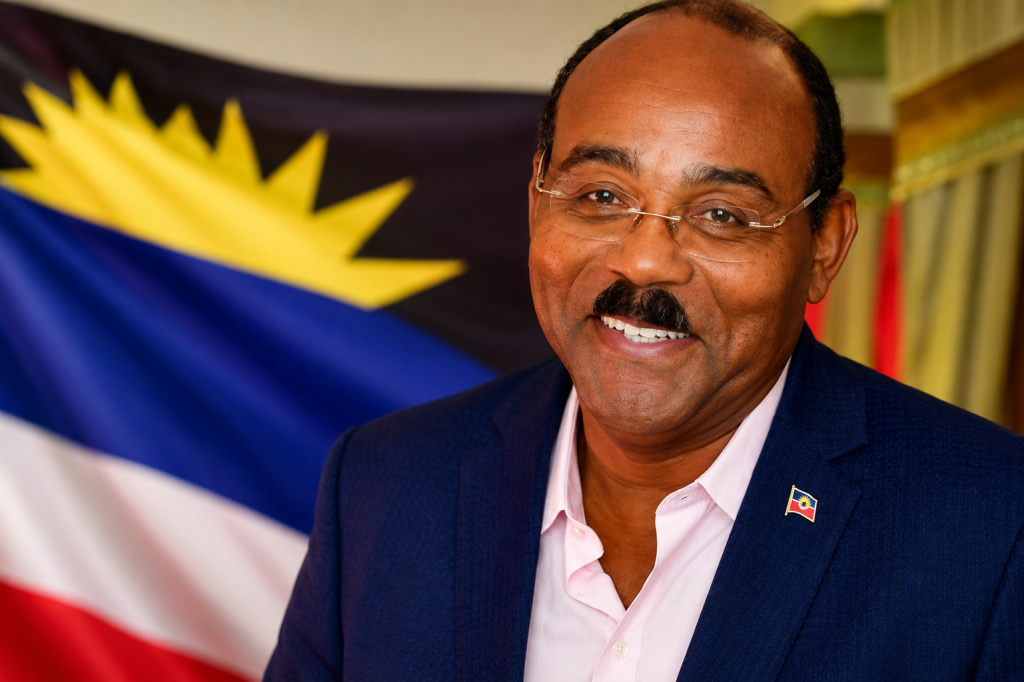
Prime Minister Gaston Browne has renewed Antigua and Barbuda’s call for reparations for slavery and colonialism, arguing that true repair must go beyond acknowledging history and deliver tangible improvements in the lives and opportunities of people across the developing world.
In his Emancipation Day address, Browne made a forceful case for reparatory justice, insisting that the issue should not be framed as a request for charity or an attempt to place blame on people living today for the actions of their ancestors.
“Reparations are neither an appeal for charity, nor an exercise in assigning inherited blame,” Browne said. “They are grounded in principles of justice, equity and historical accountability.”
As Antigua and Barbuda marked 192 years since emancipation, the Prime Minister argued that the economic consequences of slavery and colonialism remain deeply embedded in the international system.
Browne pointed to the starkly different starting points inherited by former slave-owning societies and former colonies. Countries that accumulated wealth through the unpaid labour of enslaved Africans entered the modern era with significant capital, he said, while newly independent nations were left to confront structural disadvantages.
Those historical disparities, Browne maintained, continue to influence global wealth, access to financing, technological advancement and economic opportunity.
He said reparatory justice must therefore be measured by practical action rather than symbolic gestures.
Among the areas he identified for investment are education, healthcare, technology, climate resilience and institutional development.
The Prime Minister also called for reforms to the international financial system, including debt reform and fairer access to international financing and global markets, particularly for small developing states that continue to face significant barriers to economic advancement.
“Repair is not about revisiting the past. It’s about creating a more just and equitable future,” Browne declared.
Browne also stressed that emancipation did not immediately bring an end to exploitation.
While the abolition of slavery in 1834 legally ended the institution, he said poorly paid labour and discriminatory laws continued to preserve economic and political power in the hands of a privileged minority.
According to the Prime Minister, the legacy of those systems remains visible today, particularly in developing countries and Black-led small states that continue to face restricted development options and unequal access to resources.
He further argued that reparations have a role to play beyond addressing historical injustice, suggesting that meaningful reparatory action could help deter future atrocities by strengthening international accountability for crimes against humanity.
For Antigua and Barbuda, Browne said the anniversary of emancipation should serve as a reminder that freedom must be understood in broader terms.
Political independence and the abolition of slavery, he suggested, are only part of the journey.
As the nation commemorated 192 years since emancipation, the Prime Minister called for a renewed commitment to building a society where freedom is reflected not only in political rights, but also in economic opportunity, social justice and human dignity.
His message was clear: the struggle for freedom did not end with emancipation, and the pursuit of justice must continue to shape the future.