
By Hon. E.P Chet Greene
August 2 2026 | Featured Story

On this solemn anniversary of Emancipation, 192 years since the chains of slavery were legally broken across the British Empire in 1834, we have much to be concerned about. The journey from bondage to freedom, from colony to independent nation, is a testament to the indomitable spirit of our people. As we celebrate our victories, we must also confront a sobering truth: the ghosts of the past are being resurrected in new, insidious forms.
The history of Antigua and Barbuda is written in blood, sweat and the unyielding pursuit of dignity. The brutal plantation economy, punctuated by revolts in 1701 and 1729 and the courageous, though thwarted, uprising led by King Court in 1736, laid bare the human cost of colonial greed.
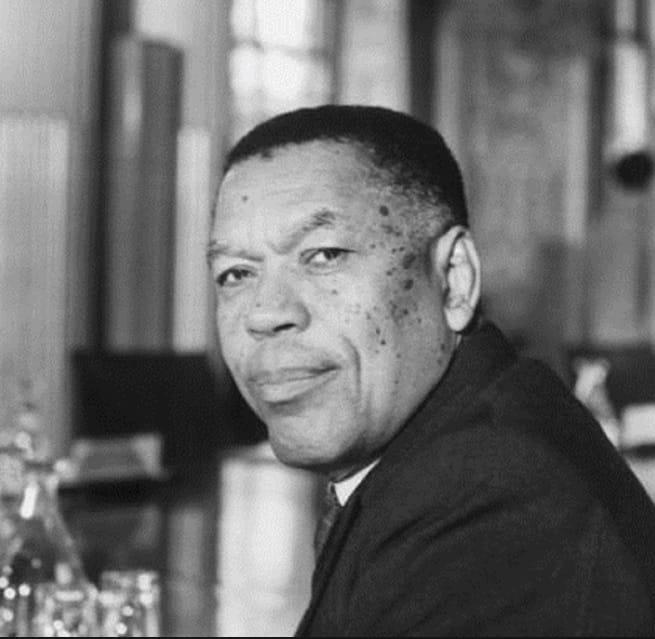
Father of the Nation and National Hero of Antigua and Barbuda
Sir Vere Cornwall Bird, “Papa Bird,” stands as the towering Father of the Nation, who guided us to political independence on November 1, 1981. His legacy is etched into our national consciousness, a symbol of the political agency we fought so hard to achieve. Alongside him, a pantheon of leaders and activists, names like George Walter, who served as Premier from 1971 to 1976 and countless unsung heroes navigated the treacherous waters of the colonial era, steering us toward the achievement of adult suffrage and ultimately, self-determination.
Our national symbols reflect this triumph. The rising sun on our flag is not just a dawn; it is the dawn of a new era, a promise of hope. The motto on our coat of arms, “Each Endeavouring, All Achieving,” is a powerful reminder that our freedom was not given; it was earned through collective struggle.
Our economies remain dangerously monocultural, relying heavily on tourism. While it brings revenue, it also makes us acutely vulnerable to external shocks like the COVID-19 pandemic, climate change and global economic downturns. When a hurricane damages a resort or a pandemic halts air travel, the entire economic chain suffers, pushing our most vulnerable citizens toward exploitation.
As a Small Island Developing State (SIDS), we are on the front lines of the climate crisis. Hurricanes, drought and rising sea levels are not just environmental threats; they are human rights crises. The devastating impact of Hurricane Irma on Barbuda in 2017 was a stark preview, forcing the evacuation of the entire island. This event disrupted lives and livelihoods. The cost of rebuilding was astronomical, pushing us further into debt.
Many Caribbean nations carry some of the highest debt-to-GDP ratios in the world, a burden that can be traced back to colonial extraction.
Today, this debt acts as a powerful tool of control, forcing governments to adopt externally imposed “structural reforms” that often prioritize the interests of international financial institutions and foreign creditors over the well-being of our citizens and development.
Our CBI program, a vital source of revenue for national development, is currently under immense pressure from the European Union, which has demanded its phase out by 2028. This is a clear example of powerful nations dictating the economic policy of sovereign states, forcing us to abandon a critical financial tool without offering a viable alternative. The language of “risk” and “security” used by the EU masks a new form of dominance over our fiscal sovereignty.
Research suggests that there is a relationship between continued ties to a former colonizer and economic resilience. Some dependent territories, like the Dutch Caribbean islands, have higher economic resilience precisely because they maintain strong institutional ties to the metropole. This presents a paradox: independence is a political and moral victory, but the structures of global power can make it an economic vulnerability. The decision by Barbados to remove the Queen as Head of State is a powerful symbolic rejection of this colonial legacy, however the economic “curse” of colonialism remains a persistent challenge.
A Future Forged in Resilience
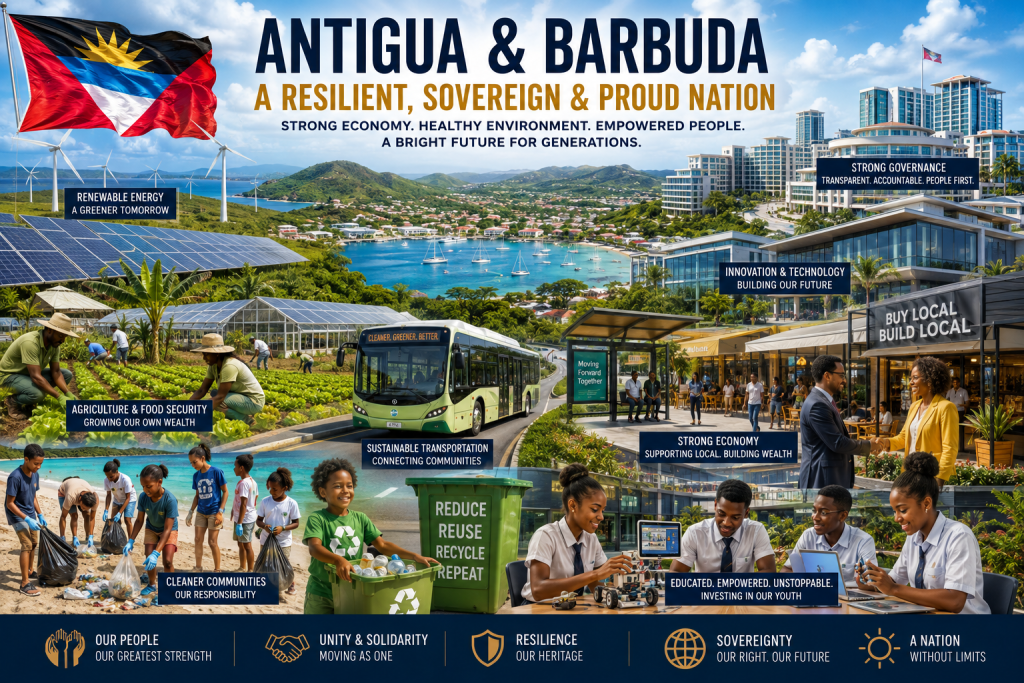
In the face of these challenges, the spirit of “Never Again” must be our unshakeable guide. We cannot afford to be passive spectators to our own history. We must exercise our agency.
Prime Minister Gaston Browne’s firm stance that Antigua and Barbuda will not unilaterally abandon the CBI program without a credible alternative is a crucial assertion of our sovereignty. We must continue to negotiate from a position of strength, demanding that the global community understands our unique vulnerabilities and needs.
We must diversify our economy. While tourism is our lifeblood, we must invest in agriculture, renewable energy, the blue economy and the technology sector to create a more robust economic foundation. As research suggests, strong institutions and good governance are key to building economic resilience.
The Caribbean Community (CARICOM) must continue to present a collective front on the global stage, advocating for fair trade, climate justice and an end to the coercive practices that treat small nations as subjects rather than sovereign equals.
We must remember that the goal of economic development is human development. The recent report by Free the Slaves, which links climate stress to an increased risk of human trafficking and exploitation, is a stark warning. As a nation born from the trauma of slavery, protecting the most vulnerable among us from the devastating impacts of climate change and economic hardship is our most sacred duty.

The challenge before us is immense, but it pales in comparison to what our ancestors endured. They were stripped of their names, their languages and their humanity. They did not break. They built a culture of resilience, creativity and defiance that is your inheritance today.
We must not surrender that inheritance to despair. The “Never Again” position is not just a rejection of the past; it is a commitment to a future of true sovereignty. It demands that we educate ourselves, hold our leaders accountable, support our local businesses and build a community that is strong, self-reliant and just.
The world may see us as small, vulnerable islands but we are the descendants of the enslaved who defeated Napoleon’s army in Haiti, the visionaries who forged a nation against all odds and the people who maintain a joyous, vibrant culture in the face of immense adversity. We are not victims of geography; we are masters of our destiny.
As we mark 192 years of Emancipation, let us do so not with a sense of completion but with a renewed commitment to the unfinished work of liberation. The chains have been broken but the struggle for true justice, economic freedom and a fair place in the world continues. This is our moment to write the next proud chapter of the story of Antigua and Barbuda.